 Pin This
 There's something about the sizzle of onions hitting hot oil that makes me slow down in the kitchen, and that's exactly what drew me to shakshuka years ago. I was standing in a cramped Jerusalem café, watching the cook crack eggs directly into a bubbling tomato sauce with the kind of casual confidence that only comes from making something a thousand times. The plate arrived still steaming, and I remember tearing off a piece of pita, dragging it through that golden yolk, and suddenly understanding why this dish has fed families across the Levant for generations. It's humble, it's unfussy, and somehow it tastes like home before you even know what home is.
I made this for my partner on a Tuesday morning when neither of us felt like doing much of anything, and the kitchen filled with this warm, paprika-tinged smell that made the entire apartment feel instantly cozier. We ate straight from the skillet like it was just the two of us in the world, and I remember thinking how the simplest foods sometimes give you the most honest moments. That's when shakshuka stopped being just a recipe and became something I reach for when I want to turn an ordinary day into something that feels a little bit sacred.
Ingredients
- 1 large onion, finely chopped: This is your flavor foundation, so don't rush it. I learned to chop it a bit smaller than I think I need because it disappears into the sauce and creates this sweet, caramelized depth.
- 1 red bell pepper and 1 yellow bell pepper, diced: The color matters here, not just for looks but because each one brings slightly different sweetness to the party. Use whatever you have if they're not both available, though.
- 3 garlic cloves, minced: Mince it fine because you want it distributed throughout the sauce, not finding big chunks while you're eating.
- 2 cups baby spinach (optional): This wilts down to almost nothing, so don't worry about it taking over. I add it mostly for the iron and the way it makes the dish feel more complete.
- 1 jalapeño, seeded and finely chopped (optional for heat): Seed it if you like, but honestly, a little heat is what makes this dish sing. Trust your instincts on how much you can handle.
- 2 tablespoons olive oil: Don't skimp here. Good olive oil carries the flavor in ways cheap oil simply cannot.
- 1 teaspoon ground cumin, 1 teaspoon paprika, ½ teaspoon ground coriander, ¼ teaspoon cayenne pepper: These four are the heartbeat of shakshuka. Toast them in the hot oil briefly to wake them up, and your kitchen will smell like a Middle Eastern spice market.
- 1 (28-ounce) can crushed tomatoes and 1 teaspoon sugar: The sugar isn't about sweetness. It's about balancing acidity and letting the tomato flavor come through without that sharp edge.
- Salt and black pepper, to taste: Season as you go, not all at once at the end.
- 4 to 6 large eggs: Fresh eggs make a difference here because the yolks stay plump and beautiful. Room temperature eggs poach a touch more gently.
- ¼ cup fresh cilantro or parsley, chopped: Add this right before serving so it stays bright and fresh, not wilted and sad.
- ½ cup crumbled feta cheese (optional): If you use it, let it be generous. Half measures don't do feta any favors.
- 4 pita breads, warmed: Warm them just before serving, either wrapped in foil in the oven or quickly in a dry skillet.
Tired of Takeout? 🥡
Get 10 meals you can make faster than delivery arrives. Seriously.
One email. No spam. Unsubscribe anytime.
Instructions
- Build your flavor base:
- Heat your olive oil in a large skillet over medium heat and add the chopped onion, stirring occasionally until it turns translucent and softens, about 3 minutes. You're listening for that gentle sizzle and watching for the onion to lose its harsh rawness and start smelling sweet.
- Add the peppers and heat:
- Toss in the diced bell peppers and jalapeño, letting them cook together for about 5 minutes until they're tender and starting to caramelize at the edges. This is when the skillet becomes truly fragrant, and you'll notice the vegetables begin to collapse slightly into the oil.
- Bloom your spices:
- Stir in the garlic, cumin, paprika, coriander, and cayenne, cooking everything together for just about 1 minute until the spices coat the vegetables and release their volatile oils. The entire skillet will smell transformed, deeper and warmer than before.
- Simmer the sauce:
- Pour in the crushed tomatoes along with the sugar, salt, and black pepper, then let everything bubble gently uncovered for 10 to 12 minutes, stirring occasionally, until the sauce thickens and darkens slightly. You're aiming for a sauce that clings to the spoon but still moves around the pan.
- Wilt the greens:
- If you're using spinach, scatter it over the sauce and stir gently until it wilts down, about 2 minutes. It releases moisture initially, so don't panic when it seems to make the sauce thinner. It settles back down.
- Create wells for the eggs:
- Using the back of your spoon, make small gentle wells or divots in the sauce, spacing them apart so each egg has its own little nest. You want the eggs to nestle into the sauce, not sit on top of it.
- Crack and cover:
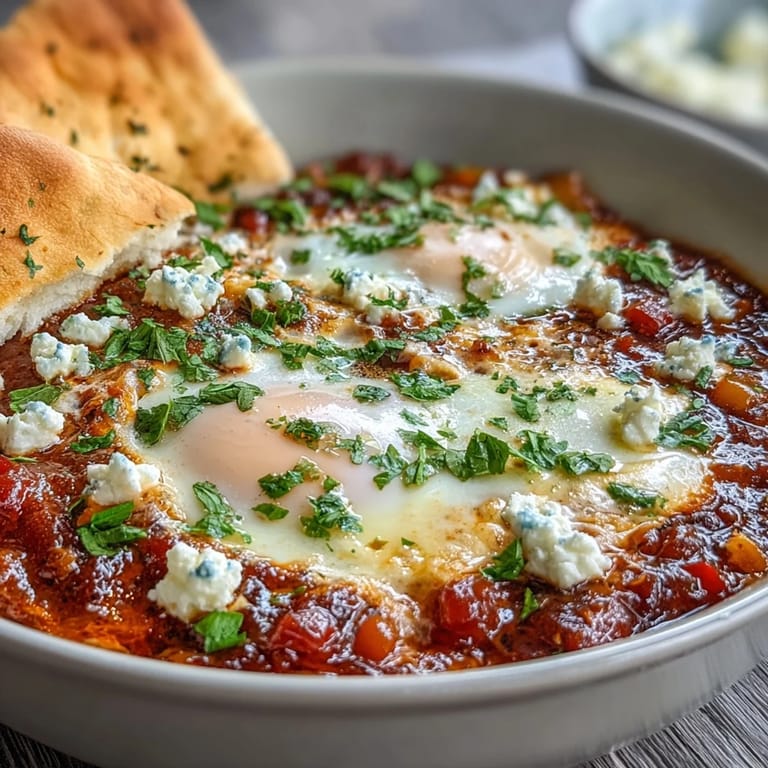
- Carefully crack an egg into each well, keeping the yolks as intact as possible, then cover the skillet with a lid and turn the heat down to medium-low. You're not trying to cook these eggs hard. You want the whites to set while the yolks stay runny and willing to melt into everything else.
- Cook until perfect:
- Check after 6 minutes by peeking under the lid. The whites should be mostly opaque but still slightly jiggly around the yolks, which should feel like they might run if you nudge them. Another minute or two might be all you need, depending on your stove and how many eggs you've packed in.
- Finish with brightness:
- Remove the skillet from heat, scatter the fresh cilantro or parsley over everything, and add the feta if you're using it. The residual heat will keep everything warm without cooking the herbs into submission.
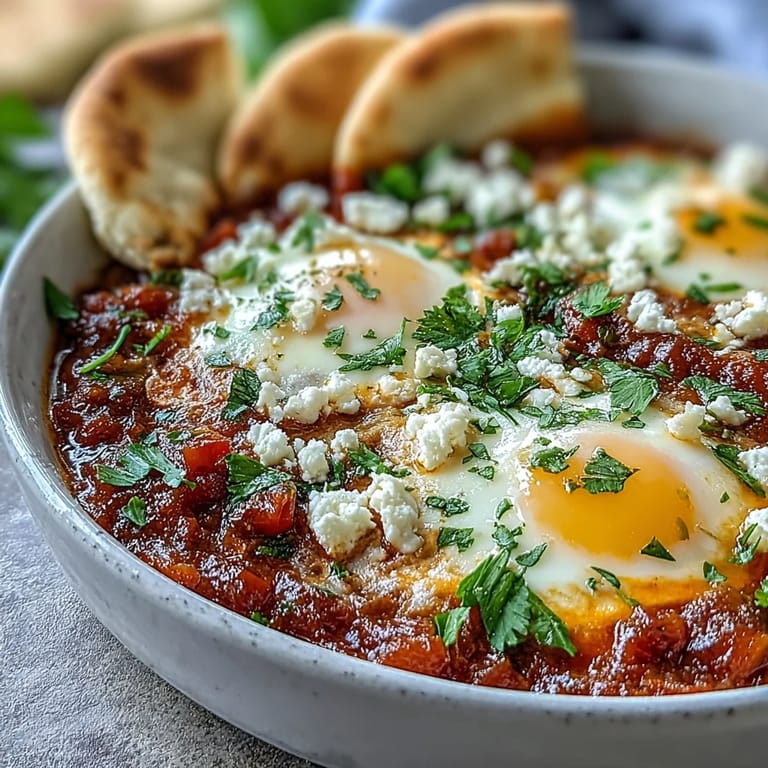 Pin This
 My grandmother once told me that shakshuka was invented because someone forgot to drain their tomatoes and decided it was perfect anyway. I'm not sure if that's true, but I love the spirit of it, the idea that sometimes our best meals come from happily embracing what we didn't plan for. This dish has taught me that freedom in the kitchen often tastes better than rigid perfection.
The Sauce Is Everything
Don't rush the tomato sauce or treat it like a side player in this recipe. This is where all the flavor lives, and giving it those full 10 to 12 minutes to thicken and concentrate is the difference between shakshuka and just eggs in tomato soup. The sauce should coat the back of a spoon and look noticeably darker and more intense than when you first poured in the canned tomatoes. If you taste it and feel like something's missing, it's almost always more time and a pinch more salt.
Variations That Actually Work
This recipe is flexible enough to accommodate whatever's in your kitchen without losing its essential personality. I've made it with roasted red peppers from a jar on nights when I didn't have fresh ones. I've stirred in chickpeas for extra protein and found it becomes almost a different (but equally good) dish. I've even added handfuls of kale instead of spinach when that was what needed using. The core of shakshuka is the spiced tomato sauce and the eggs, and as long as you have those two things, you're making something real.
Serving and Company
Shakshuka tastes best eaten immediately and shared with someone. There's something about standing at the stove with the skillet on a trivet between you and another person, both of you tearing bread and dragging it through sauce, that makes it transcend being just breakfast or dinner and become more like a conversation. It's one of those rare dishes that seems to encourage slowing down, lingering, and paying attention to what you're eating.
- If you're serving a crowd, make two skillets instead of trying to squeeze more eggs into one, because everyone deserves a runny yolk.
- A dollop of Greek yogurt or labneh on the side adds richness and tang that plays beautifully against the spice.
- This isn't meant to be elegant plated food. Serve it family-style and let people help themselves directly from the skillet.
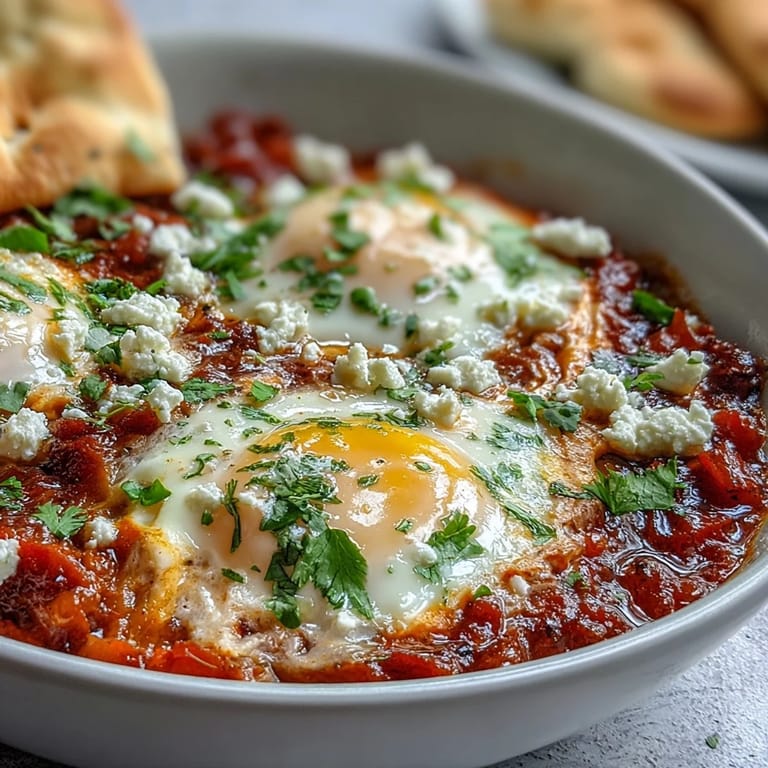 Pin This
 Shakshuka taught me that some of the best dishes in the world ask very little of you except to pay attention and trust the process. Make this when you want to feel nourished, connected, and reminded that food can be both simple and profound.
Recipe FAQ
- → How do I know when the eggs are done?
The eggs are ready when the whites are fully set and opaque, but the yolks still jiggle slightly when you gently shake the pan. This usually takes 6–8 minutes covered. For firmer yolks, cook an additional 2–3 minutes.
- → Can I make this ahead of time?
The tomato sauce base can be made up to 2 days ahead and stored in the refrigerator. Reheat gently before adding eggs. However, eggs are best cooked fresh and served immediately.
- → What can I serve instead of pita bread?
Crusty bread, naan, or even rice work well as alternatives. For a low-carb option, serve with roasted vegetables or simply enjoy on its own with a spoon.
- → How spicy is this dish?
The spice level is medium. You can control the heat by adjusting the amount of jalapeño and cayenne pepper. Omit both for a mild version, or increase for extra kick.
- → Can I add other vegetables?
Absolutely! Diced eggplant, zucchini, or mushrooms work well. Add them with the bell peppers so they have time to soften and cook through.