 Pin This
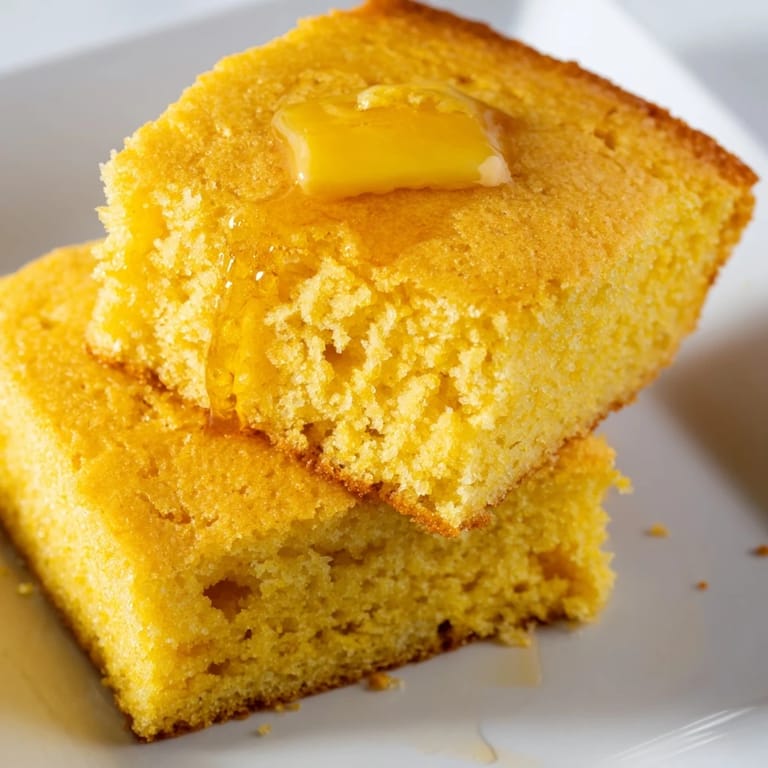
 There's something about cornbread that stops conversations mid-sentence. My neighbor brought a cast-iron skillet of it to a block party years ago, still warm from her oven, and I watched people abandon their potato salad to hover around it. She never shared the recipe that day, just smiled when I asked. After plenty of kitchen trial and error, I finally cracked the code: it's all about that perfect balance of sweet and savory, the way the edges get crispy while the center stays tender, and knowing exactly when to stop stirring.
I made this for a chili dinner during the first real cold snap of the season, and my partner literally said "this tastes like comfort" before asking for seconds. Watching someone's face light up when they bite into warm cornbread with honey butter is one of those small kitchen victories that reminds you why cooking matters.
Ingredients
- Yellow cornmeal (1 cup): This is your bread's backbone, giving it that distinctive texture and subtle corn flavor that regular flour can't replicate.
- All-purpose flour (1 cup): Balances the cornmeal so your cornbread rises properly without becoming too dense or crumbly.
- Granulated sugar (1/4 cup): Just enough sweetness to make it interesting, but not so much that it tastes like dessert; adjust down if you're team savory.
- Baking powder and baking soda (1 tablespoon and 1/2 teaspoon): These two work together to give you that perfect tender crumb and slight rise.
- Fine sea salt (3/4 teaspoon): Enhances all the flavors and keeps the sweetness from becoming cloying.
- Whole milk (1 cup): Use buttermilk if you want a tangier, slightly more complex flavor that plays beautifully with cornbread.
- Eggs (2 large): Bind everything together and help create that light, fluffy interior.
- Unsalted butter and vegetable oil (1/4 cup each, melted): The combination gives you richness without making it greasy, and a skillet preheated with butter creates those crispy, golden edges.
- Honey (2 tablespoons, optional): A teaspoon of extra honey deepens the flavor if you want it.
Tired of Takeout? 🥡
Get 10 meals you can make faster than delivery arrives. Seriously.
One email. No spam. Unsubscribe anytime.
Instructions
- Set yourself up for success:
- Preheat your oven to 400°F and grease your pan thoroughly with butter or nonstick spray, making sure the corners are covered. A cast-iron skillet gives you the crispiest, most restaurant-quality edges, but any 8-inch or 9-inch baking pan works beautifully.
- Build your dry base:
- Whisk together the cornmeal, flour, sugar, baking powder, baking soda, and salt in a large bowl, making sure everything is evenly distributed so you don't end up with pockets of baking soda that taste metallic.
- Combine the wet ingredients:
- In a separate bowl, whisk the milk, eggs, melted butter, oil, and honey until they're fully combined and smooth. This step is important because it ensures the eggs and fats are evenly distributed.
- Bring it together gently:
- Pour the wet mixture into the dry ingredients and stir with a spatula until just barely combined; you're looking for a few small streaks of flour still visible. Overmixing develops gluten and creates a tough, dense crumb that no one wants.
- Pour and smooth:
- Transfer the batter into your prepared pan and use a spatula to level the top so it bakes evenly.
- Bake until golden:
- Bake for 20 to 25 minutes, watching for the top to turn golden brown and a toothpick inserted in the center to come out clean with just a few moist crumbs clinging to it. The edges should pull away slightly from the sides of the pan.
- Rest and serve:
- Let it cool in the pan for 10 minutes so it sets enough to slice cleanly, then turn it out or serve it straight from the pan while it's still warm.
 Pin This
 A friend once told me that cornbread reminds her of her grandmother's kitchen in Georgia, where the smell of it baking meant family was coming over. That's when I realized cornbread isn't just food—it's the edible version of someone saying "I'm glad you're here."
Choosing Your Pan
Cast iron is the gold standard because it holds heat evenly and creates those crispy, slightly caramelized edges that make people lean in for another slice. If you don't have cast iron, a ceramic baking dish works fine, though you'll get less crust. The key is making sure whatever pan you use is well-greased and preheated so the batter starts cooking the moment it hits the pan, giving you that satisfying texture.
Flavor Variations That Actually Work
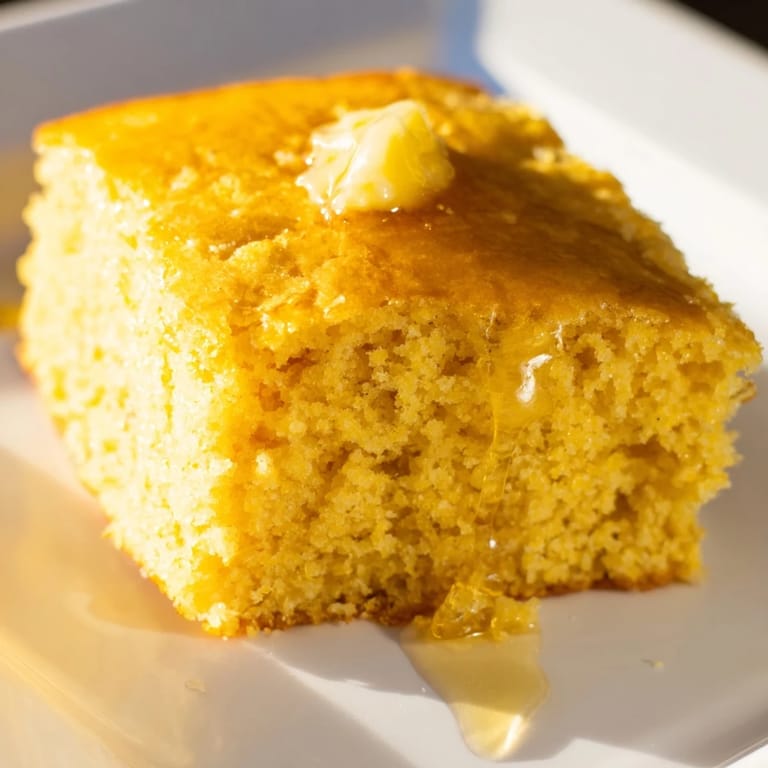
The beauty of cornbread is how easily it adapts to whatever mood you're in. Feeling savory? Fold in shredded cheddar, chopped scallions, or diced jalapeño before pouring the batter. Want something more indulgent? Brush the warm cornbread with honey butter right out of the oven and watch it melt into the cracks. I've even added a tablespoon of fresh lime zest when serving it alongside spicy dishes, and the subtle brightness surprised everyone.
Storage and Keeping It Fresh
Cornbread stays moist for about three days wrapped tightly at room temperature, and it freezes beautifully for up to three months if you wrap it well. I usually slice and freeze individual pieces so I can reheat just what I need, and a quick 10 seconds in the microwave brings back that almost-fresh-from-the-oven texture.
- Store it in an airtight container or wrapped tightly in foil to keep it from drying out.
- Reheat slices in a skillet with a tiny bit of butter for the best results, or wrap in foil and warm in a 300°F oven for a few minutes.
- Day-old cornbread makes incredible cornbread crumbles for salads or as a crispy topping for creamed corn.
 Pin This
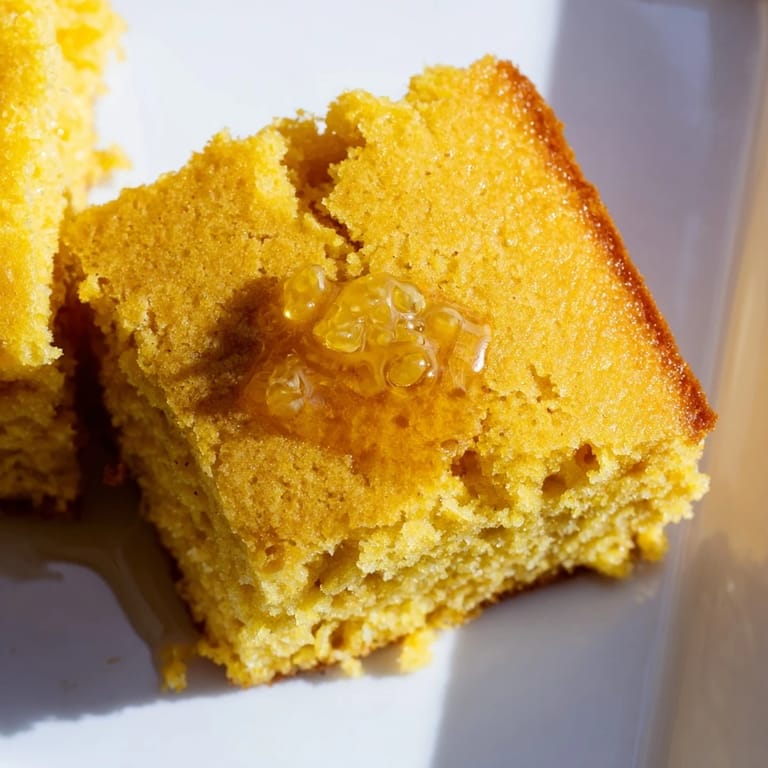
 Cornbread has a way of turning ordinary meals into moments worth remembering. Bake one, and you'll understand why.
Recipe FAQ
- → What gives cornbread its golden crust?
The golden crust develops from baking at a high temperature combined with melted butter or oil in the batter, which helps brown the exterior beautifully.
- → Can I make cornbread without buttermilk?
Yes, whole milk works well and keeps the crumb tender. Buttermilk adds a slight tang and reacts with baking soda for a fluffier texture.
- → How can I make cornbread more savory?
Additions like shredded cheddar, chopped scallions, or diced jalapeños enhance the savory flavor without altering the baking process.
- → What is the best pan for baking cornbread?
Using an 8-inch square pan or a cast-iron skillet helps achieve a crispy crust and even baking throughout.
- → How do I know when cornbread is done baking?
It’s ready when the top is golden and a toothpick inserted into the center comes out clean, typically after 20–25 minutes.