 Pin This
 The moment I first made this spring cake, sunlight was pouring through the kitchen window, and the air smelled faintly of citrus. There was something meditative about laying out the delicate, pressed edible flowers, each one like a little celebration of the season. The sound of the mixer humming, the warmth from the oven, and the anticipation of tasting lemon curd spooned over soft sponge still stands out clearly. I love how even a quiet afternoon can turn into a canvas for a cake this pretty. Decorating it felt less like a chore, more like arranging a wildflower bouquet on a plate.
Last Easter, I brought this cake to a garden picnic, and it was the first time my little cousin paused long enough to ask if she could eat a flower. Half the table reached for seconds, and even my uncle, who rarely eats dessert, tucked a leftover slice into his coat pocket before leaving. Only the soft arguments over which flower tasted best were louder than the birds overhead.
Ingredients
- Unsalted butter: Room temperature makes creaming easier and ensures a fluffy sponge.
- Granulated sugar: The right amount of sweetness for both cake and curd — I learned to always sift it for a smoother texture.
- Large eggs: Give the cake structure and the curd its silky richness; let them come to room temperature before starting.
- Vanilla extract: Rounds out sharp lemon notes, so don't scrimp on quality.
- All-purpose flour: Sifted flour keeps the crumb tender and light.
- Baking powder: Freshness is key for a high rise; I check my tin before baking.
- Fine sea salt: Just a half teaspoon to accentuate all the flavors, not make the cake salty.
- Whole milk: Brings a rich taste; room temperature prevents the batter from curdling.
- Lemon zest: This oil-packed skin brightens the cake and curd — always zest before juicing.
- Freshly squeezed lemon juice: For tangy, fragrant curd, real juice makes all the difference.
- Powdered sugar: Dissolves easily into cream for that cloud-like finish.
- Heavy cream: Chilled thoroughly for whipping into sturdy peaks.
- Pressed edible flowers: Violets, pansies, and nasturtiums shine best/ — make sure they're truly edible and pesticide-free.
Tired of Takeout? 🥡
Get 10 meals you can make faster than delivery arrives. Seriously.
One email. No spam. Unsubscribe anytime.
Instructions
- Prep your pans and oven:
- Get your oven heating to 350 °F (175 °C) and line two round pans with parchment so nothing sticks later.
- Cream the butter and sugar:
- Whip butter with sugar in a big bowl until it's pale and fluffy, letting the scent fill the kitchen.
- Add eggs, vanilla, and zest:
- Beat in eggs, one by one, then stir in vanilla and lemon zest to fill the air with brightness.
- Combine dry ingredients:
- Whisk flour, baking powder, and salt together in a separate bowl, being careful not to compact the flour.
- Mix wet and dry (add milk):
- Add the flour mixture in three parts, alternating with milk, and mix just until you see no streaks—gentle hands make for a softer crumb.
- Bake the cakes:
- Divide the batter into the pans, smooth the tops, and bake for 25–30 minutes, keeping an eye for golden edges and a clean toothpick.
- Cool the layers:
- Once out, let the cakes rest in pans for 10 minutes before loosening carefully onto a rack to cool completely.
- Make lemon curd:
- In a heatproof bowl over simmering water, whisk eggs, sugar, lemon juice, and zest constantly until thick; whisk in butter off the heat for a glossy finish.
- Whip the cream:
- Beat chilled cream with powdered sugar and vanilla until peaks hold their shape; don’t over-whip to avoid butter.
- Layer and fill:
- Place the first cake layer on your plate, cover with lemon curd, and gently top with the second layer.
- Frost and decorate:
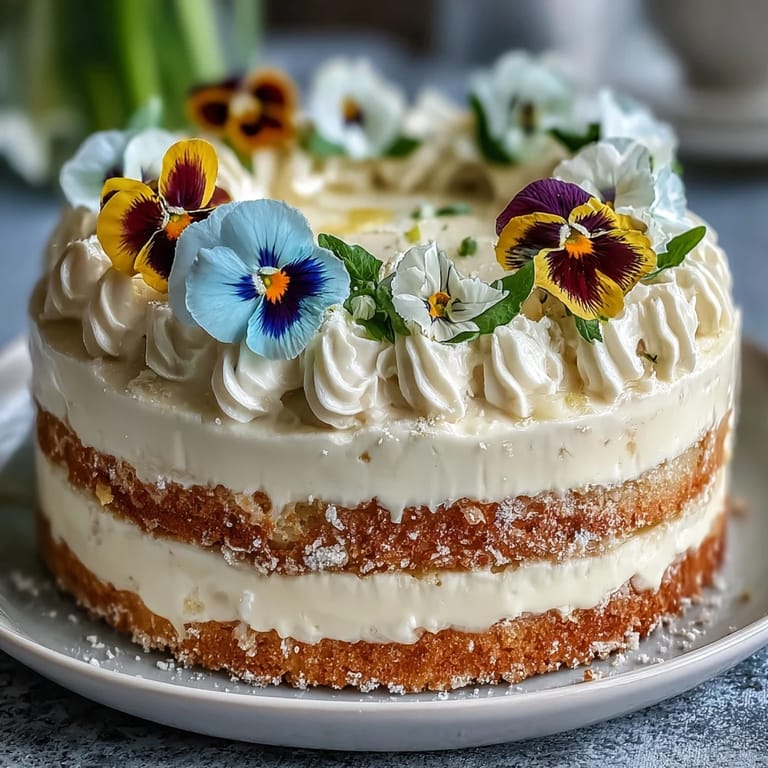
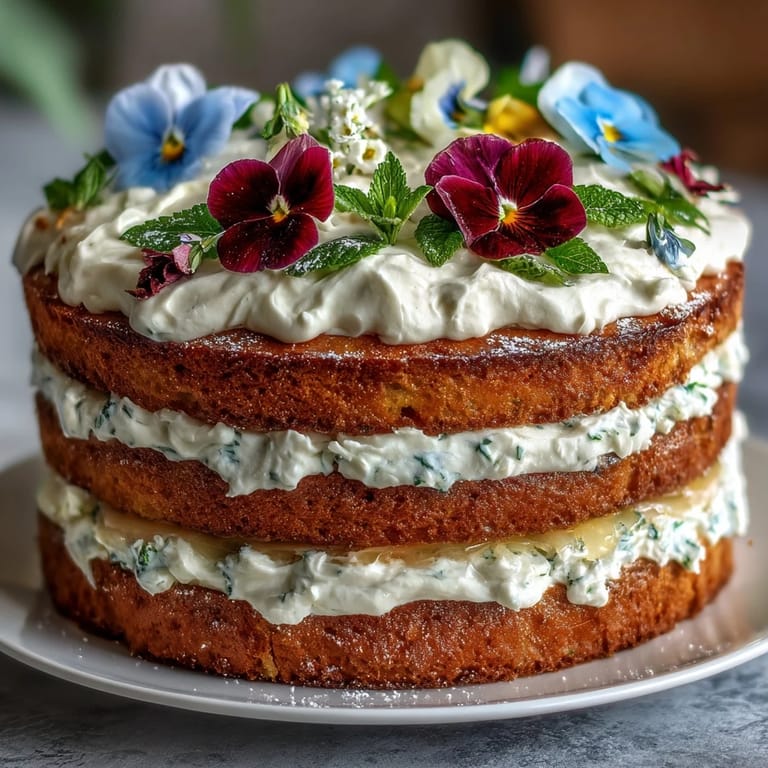
- Sweep whipped cream over the top and sides, then press edible flowers across the surface, letting your instincts guide the arrangement.
- Chill and set:
- Set the finished cake in the fridge for at least 30 minutes to let the flowers and cream firm up before slicing.
 Pin This
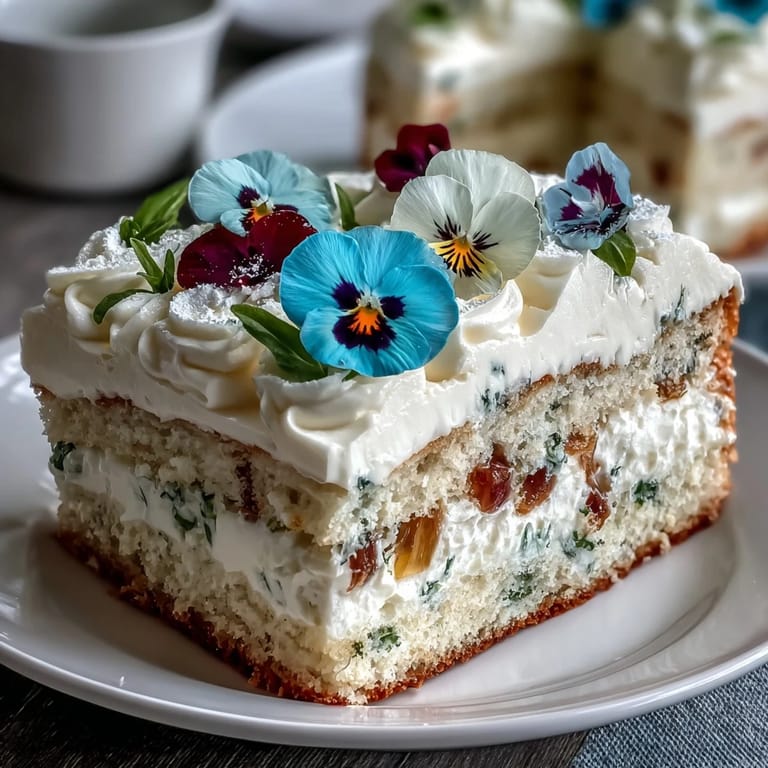
 Watching friends snap photos of the cake at a spring birthday made me realize it became the center of the celebration, not just dessert. It’s a rare moment when food feels almost too pretty to eat. That first slice—yellow curd peeking beneath whipped cream and petals—always gets everyone talking.
Choosing the Right Flowers
I sometimes spend half an afternoon pressing flowers between cookbooks, hoping for flat, colorful petals that hold their shape. Not all pretty blooms are edible, so sourcing from a farmers’ market or trusted garden is a ritual worth repeating. Pansies and violets, in particular, keep their color and a subtle grassy sweetness, while rose petals add the most romance atop the cream.
Handling Lemon Curd Without Fear
The first time I made lemon curd, I hovered nervously, whisking and second-guessing every minute. Over time, I learned that patience is the real secret—the mixture will suddenly change from thin to thick, and that’s your cue. Just keep stirring and take it off the heat as soon as it coats the back of your spoon.
Assembling for Wow Factor
I like to call in a friend when decorating, because another set of hands makes pressing flowers less fussy and more fun. Start from the center and work outward, letting some petals overlap and others stand alone for a look that’s natural, not too perfect. Remember, the cake’s meant to look like a wild meadow after spring rain.
- Chill the cake before arranging the flowers for a less slippery surface.
- Handle flowers with clean, dry fingers to keep them pristine.
- Press gently—a firm touch can dent the whipped cream.
 Pin This
 May this cake bring a little spring sunshine into your kitchen, whether or not you have flowers blooming outside. Serving it up always feels like sharing a piece of the season itself.
Recipe FAQ
- → What types of edible flowers work for decoration?
Pansies, violets, nasturtiums, and organic rose petals are excellent choices for pressing due to their vibrant colors and mild flavors.
- → How do I keep the sponge cake moist?
Make sure to avoid overbaking and consider brushing cake layers with lemon syrup before assembling to enhance moisture and flavor.
- → Can the lemon curd be prepared ahead of time?
Yes, lemon curd keeps well in the refrigerator for up to a week. Cool completely before layering onto cake.
- → What’s the best way to press edible flowers?
Layer flowers between sheets of parchment paper and press with a heavy book for several hours or overnight to flatten gently.
- → How should leftovers be stored?
Store any remaining cake in the refrigerator, loosely covered, to maintain freshness and preserve the floral decoration.