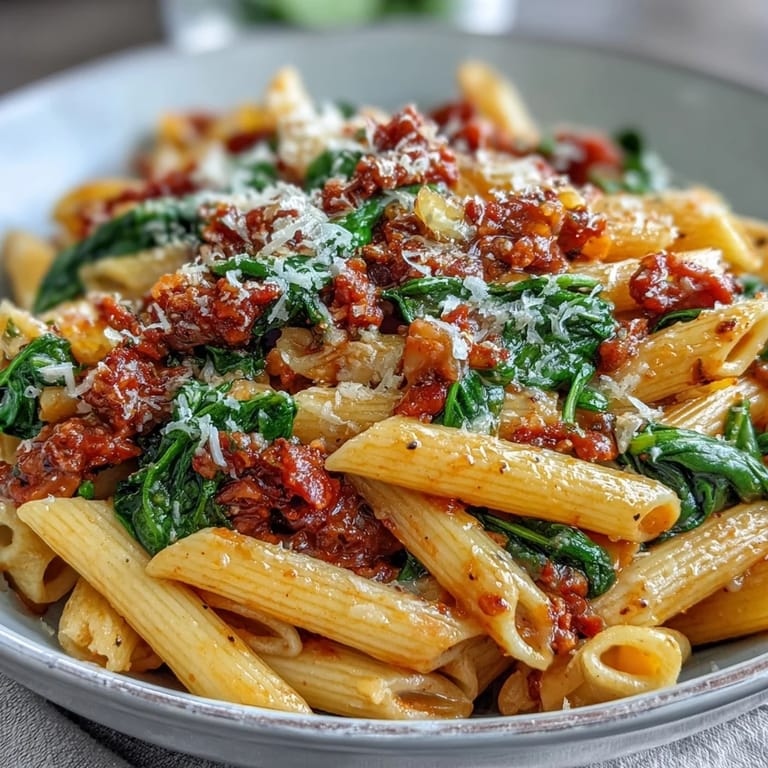
 Pin This
 There's something quietly satisfying about opening your cupboard on a Tuesday night and realizing you can make something genuinely delicious without a grocery store trip. This one-pot pasta emerged from that exact moment—when I had pasta, a few vegetables lingering in the crisper, and about twenty minutes before everyone got hungry. What started as pantry improvisation became the dish I now make on purpose, because it somehow tastes better than dishes that required way more fussing.
I made this for my neighbor last month when she mentioned feeling overwhelmed by weeknight cooking, and watching her face when she realized the whole thing took less time than her usual routine was worth every vegetable I chopped. She's made it four times since, which tells you something about how this dish just works.
Ingredients
- Dried penne or fusilli, 350 g: The shape matters more than you'd think—these tubes and spirals trap sauce beautifully, and they hold up perfectly when cooked directly in the broth without turning mushy.
- Medium onion, finely chopped: This builds the flavor foundation; don't rush the sautéing or you'll miss that sweet, translucent moment when everything smells suddenly better.
- Garlic cloves, 2 minced: Fresh garlic makes the whole pot smell like actual cooking is happening, which is half the satisfaction.
- Medium zucchini, diced: It softens into the sauce and adds body without heaviness; swap for mushrooms if you want earthiness instead.
- Red bell pepper, diced: The brightness cuts through richness and adds a hint of sweetness that balances the tomatoes perfectly.
- Canned diced tomatoes with juices, 400 g: Don't drain them—that liquid is flavor gold and becomes part of your cooking medium.
- Baby spinach, 100 g: Added at the very end so it keeps that tender texture and vivid color instead of turning into sad string.
- Vegetable broth, 700 ml: This is your cooking liquid for the pasta, so quality matters slightly more than you'd think; it seasons everything as the pasta absorbs it.
- Grated Parmesan cheese, 60 g: Real Parmesan, not the pre-grated stuff in the green can—it melts differently and tastes like actual cheese.
- Olive oil, 2 tbsp: Use something you'd actually taste, because this isn't the place to save money.
- Dried Italian herbs, 1 tsp: Oregano and basil in a blend work best; they bloom beautifully when heated with the broth.
- Chili flakes, optional ½ tsp: A whisper of heat that makes people say the flavors taste somehow deeper, even if they can't identify why.
- Salt and black pepper: Taste as you go; canned tomatoes vary in saltiness, so you're adjusting to them, not guessing.
Tired of Takeout? 🥡
Get 10 meals you can make faster than delivery arrives. Seriously.
One email. No spam. Unsubscribe anytime.
Instructions
- Start with aromatics:
- Heat olive oil in your pot over medium heat, then add the onion and garlic. Let them sauté for 2–3 minutes while you listen for the sizzle to become quieter, which means the onion is turning translucent and releasing its sweetness.
- Build the vegetable base:
- Add zucchini and bell pepper, stirring occasionally for another 2–3 minutes. You're not cooking them through; you're just softening them slightly and letting them start releasing their flavors into the oil.
- Add the pasta and liquid:
- Stir in the uncooked pasta, canned tomatoes with their juice, and vegetable broth along with the herbs, chili flakes if using, salt, and pepper. Give everything a good stir so the pasta isn't clumping and all the seasonings are distributed.
- The gentle simmer:
- Bring the pot to a boil, then reduce heat to medium-low, cover, and let it bubble gently for 10–12 minutes while stirring occasionally. This is when the magic happens—the pasta absorbs the broth, softens, and the whole pot becomes this cohesive, flavorful thing.
- Finish with greens and cheese:
- Uncover the pot, stir in the spinach and Parmesan, and cook for just 1–2 minutes until the spinach wilts and the cheese melts into creamy pockets throughout. Taste and adjust seasoning—remember that the Parmesan adds salt, so go easy at first.
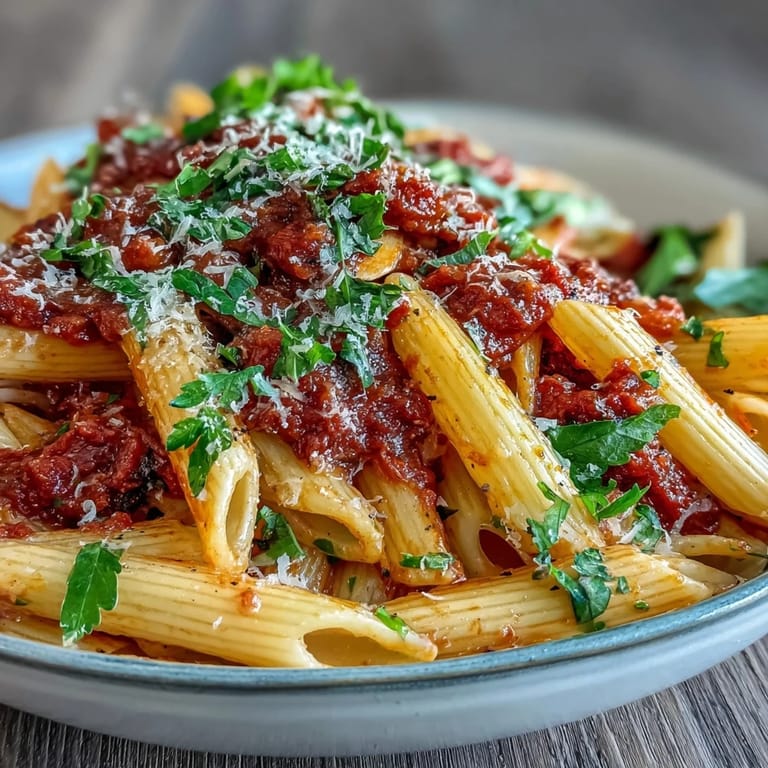 Pin This
 My daughter declared this her favorite dinner last week, which surprised me only because she's usually the one requesting more complicated things. Then I realized it wasn't about complexity—it was about the fact that it tasted like home, came together in the time it took her to set the table, and somehow felt special anyway.
Why This Works As Weeknight Salvation
One-pot meals get a bad reputation as shortcuts, but this one teaches you something important: the best cooking often happens when you're working with constraints. Because everything cooks together in the same liquid, flavors layer and deepen in ways that feel intentional rather than accidental. The pasta doesn't just absorb water—it absorbs tomato, herbs, garlic, the sweetness of caramelized onion. By the time it's tender, it's already become part of a unified whole, which is honestly harder to achieve than it sounds.
Variations That Actually Work
The beauty of this dish is that it bends without breaking. Swap the zucchini for mushrooms if you want earthiness, use frozen peas instead of fresh spinach if that's what you have, dice some carrots if you want sweetness to balance acidity differently. The structure stays solid because you're always working with the same technique—vegetables first to build flavor, then pasta cooks in liquid, then leafy greens at the end for freshness. Even the protein variations work: crumbled sausage stirred in with the pasta, shredded rotisserie chicken scattered on top, or canned white beans mixed in for vegetarian protein.
The Details That Change Everything
Seasoning this properly matters more than you'd think, because you're working with pantry staples that need balance. The canned tomatoes bring acidity, the broth brings salt, the Parmesan brings umami—and all of it needs the brightness of black pepper and the warmth of those herbs. Don't skip tasting as you go, especially after you've added the cheese. Also, real Parmesan makes a noticeable difference in the final texture; it melts into creamy pockets instead of turning into grainy powder, which changes how the whole dish feels in your mouth.
- Use good olive oil, the kind you'd taste on bread, because it's your primary fat and seasoning.
- Don't skip mincing the garlic fresh—jarred garlic tastes stale by comparison and it matters here.
- Keep the pasta at al dente so it has some texture even after cooking in liquid; slightly underdone at the 10-minute mark is smarter than perfectly done, since it continues softening.
 Pin This
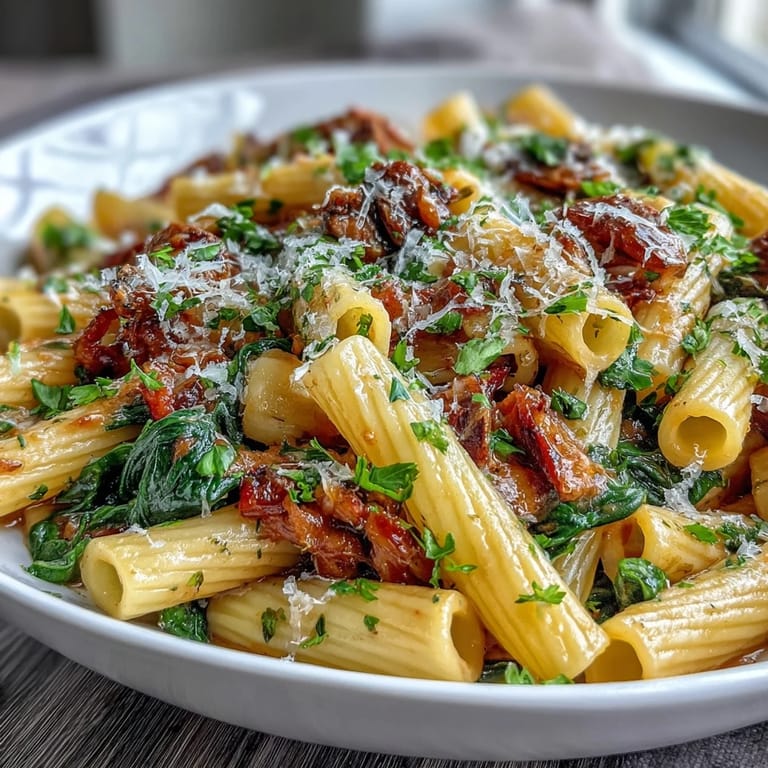
 This is the kind of dish that reminds you why cooking at home matters—not because it's complicated, but because it's honest. Serve it hot with extra Parmesan on the side and maybe some bread to soak up the sauce, and watch how something so simple becomes the meal people actually remember.
Recipe FAQ
- → What type of pasta works best for this dish?
Penne or fusilli are ideal as they hold sauce well and cook evenly in one pot.
- → Can I add protein to this meal?
Yes, cooked sausage, shredded chicken, or canned beans can be added for extra protein.
- → How do I make this dish spicier?
Include chili flakes during cooking to add a gentle heat.
- → Is it possible to prepare this gluten-free?
Using gluten-free pasta instead of traditional pasta makes this suitable for gluten-free diets.
- → What can I substitute for Parmesan cheese?
You can omit Parmesan or use dairy-free cheese alternatives for a lactose-free version.