 Pin This
 There's a particular silence that settles over the kitchen when cheesecake is baking—the kind where you can hear the oven hum and the slight crackle of a water bath doing its quiet work. I discovered New York cheesecake not through some grand occasion, but through a friend's offhand comment about how she'd never found one dense enough to satisfy her, creamy enough to feel luxurious. That challenge stuck with me, so one Saturday I set out to prove that the right technique—room temperature ingredients, a careful hand, and patience—could yield something genuinely indulgent.
I remember bringing this cheesecake to a dinner party where someone had just announced they'd given up desserts. One slice changed their mind. What stays with me isn't just their surprise, but the way the conversation paused—how a good dessert can do that, can make people present at a table in a way that matters.
Ingredients
- Graham cracker crumbs (200 g): The foundation deserves attention; finely ground crumbs pack more evenly than chunks, and mixing them with melted butter and a touch of sugar creates that crucial sandy texture that holds without being dense.
- Unsalted butter (100 g melted): Unsalted gives you control over the salt balance, and melted butter distributes more evenly than softened, creating a crust that's tender rather than greasy.
- Granulated sugar (2 tbsp for crust): This small amount keeps the crust from tasting purely savory and helps it bind without becoming brittle when baked.
- Full-fat cream cheese (900 g): Room temperature is non-negotiable here; cold cream cheese won't blend smoothly, leading to lumps that no amount of beating will fix, and the richness comes from using full-fat without compromise.
- Granulated sugar (200 g for filling): The measurement matters because this balances the tang of cream cheese and sour cream without overwhelming the delicate flavor.
- Sour cream (240 ml): This adds tang and moisture; using it at room temperature helps it blend seamlessly into the filling rather than creating streaks.
- Large eggs (3): Room temperature eggs incorporate more smoothly, and the larger size ensures proper structure—this recipe was built around three large eggs, not medium or extra-large.
- Cornstarch (1 tbsp): This prevents the filling from cracking as it cools; it sounds minor but makes a visible difference in the finished appearance.
- Pure vanilla extract (2 tsp): Pure, not imitation, because the flavor should be clean and subtle, a whisper rather than a shout.
- Fresh lemon juice (1 tbsp): This brightens the filling without adding sweetness and prevents it from tasting heavy; if you skip it, you'll notice the difference immediately.
- Salt (1/4 tsp): A pinch that makes everything else taste more like itself.
Tired of Takeout? 🥡
Get 10 meals you can make faster than delivery arrives. Seriously.
One email. No spam. Unsubscribe anytime.
Instructions
- Build your foundation:
- Preheat the oven to 160°C (325°F), grease your springform pan, and line the base with parchment paper so the crust doesn't stick to the edges. In a bowl, combine graham cracker crumbs, melted butter, sugar, and salt, stirring until it resembles wet sand—this is the texture you want, not a paste.
- Toast the crust:
- Press the mixture firmly into the bottom of the pan, using the bottom of a measuring cup to create an even layer. Bake for 10 minutes until it's set but not darkened, then let it cool while you prepare the filling.
- Cream the cheese:
- In a large bowl, beat room-temperature cream cheese on medium speed for about 2 minutes until it's smooth and creamy, scraping the bowl halfway through. This step is crucial—it breaks down the cheese so the filling will be velvety rather than grainy.
- Build the filling:
- Add sugar and beat until well combined, about 1 minute. Then add sour cream, vanilla, lemon juice, cornstarch, and salt, mixing on low speed just until incorporated—do not overmix, as this can trap air bubbles that will create cracks later.
- Fold in the eggs:
- Add eggs one at a time on low speed, scraping the bowl after each addition and mixing just until each egg disappears into the filling. This patience prevents overworking the batter, which is the single biggest cause of cracks in cheesecake.
- Create the water bath:
- Pour the filling over the cooled crust and smooth the top with a spatula. Place the springform pan inside a larger roasting pan, then pour hot water into the outer pan until it reaches halfway up the sides of the springform—this gentle, humid heat ensures even, gentle cooking.
- Bake low and slow:
- Bake for 55–65 minutes, watching for the moment when the edges are set but the center still jiggles slightly when you tap the pan. The jiggle is your guide; it means the center will continue cooking as it cools and will set perfectly.
- Cool in the oven:
- Turn off the oven and crack the door open slightly, leaving the cheesecake inside for 1 hour. This gradual temperature change prevents the shock that causes cracking—rushing this step undoes all your careful work.
- Chill and set:
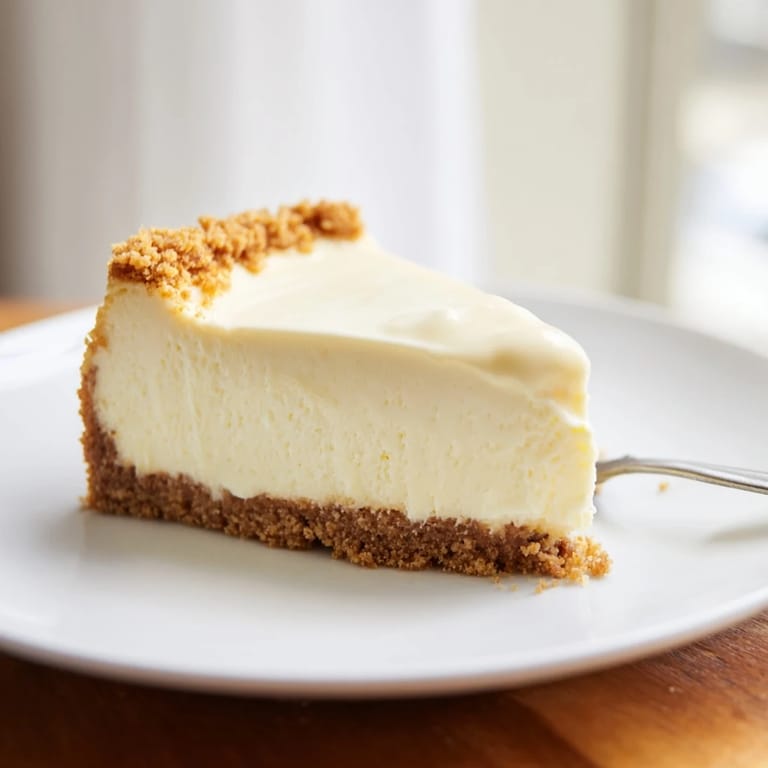
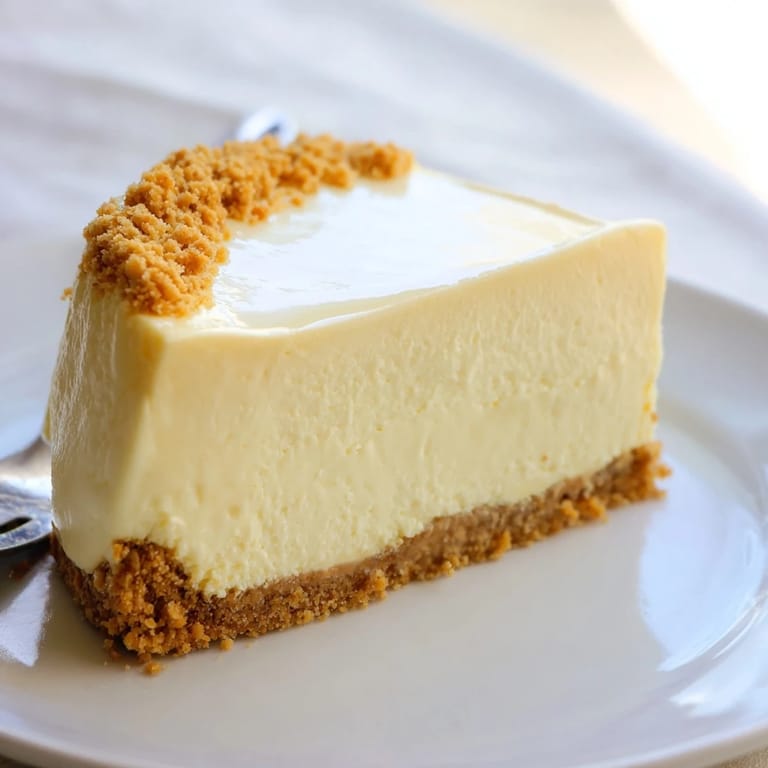
- Remove from the oven, run a thin knife around the edge to release it from the pan, and let it cool to room temperature. Refrigerate for at least 6 hours or overnight; the cheesecake continues to set and develop its dense, creamy texture during this rest.
- Slice and serve:
- Use a hot, clean knife dipped in warm water between cuts for clean slices that don't crumble. If adding the optional sour cream topping, mix the sour cream, powdered sugar, and vanilla, and spread it evenly over the chilled cheesecake just before serving.
 Pin This
 I learned the art of cheesecake patience by making every mistake first. The cracks, the sunken centers, the grainy texture—each taught me something. Now, watching the filling set in the refrigerator overnight feels like the dessert version of delayed gratification, but the result justifies every hour of waiting.
The Water Bath Secret
The water bath is where cheesecake magic happens, though it seems counterintuitive at first—submerging your dessert in hot water feels risky. The truth is that gentle, humid heat prevents the top from setting faster than the interior, which is what causes cracks and a dense outer layer around a gooey center. The water insulates the pan from the oven's dry heat, cooking the cheesecake evenly from all sides. I've baked hundreds of cheesecakes now, and every single one made in a water bath turns out better than those I tried baking directly on the oven rack.
Why Room Temperature Matters
Cold cream cheese is inflexible and won't blend smoothly with the other ingredients, leaving behind those frustrating lumps that feel like tiny stones between your teeth. The same goes for eggs and sour cream—they won't incorporate fully into a cold filling, creating pockets of un-mixed ingredients. I made the mistake of skipping this step when I was in a hurry once, and the result was grainy and disappointing. Now I pull everything out of the refrigerator about an hour before I start, letting it come naturally to room temperature. It takes patience, but it's fifteen minutes of doing absolutely nothing that guarantees success.
Variations and Flavor Explorations
Once you have this classic version down, the variations become intuitive. Swirl melted chocolate into the filling before baking for a marble effect, or layer a thin chocolate ganache on the crust before adding the filling. Some people add a tablespoon of coffee powder to the filling for depth, or a pinch of cardamom for warmth. I've even topped slices with fresh berries, a drizzle of honey, or homemade fruit compote. The base recipe is sturdy enough to support your creativity without falling apart.
- For chocolate swirl, melt 100 g of dark chocolate, let it cool slightly, then drizzle it over the filling in lines before swirling with a knife.
- Berries or fruit compote add brightness and cut through the richness without competing for attention.
- A late harvest Riesling or strong black coffee pairs beautifully alongside, complementing both sweetness and tang.
 Pin This
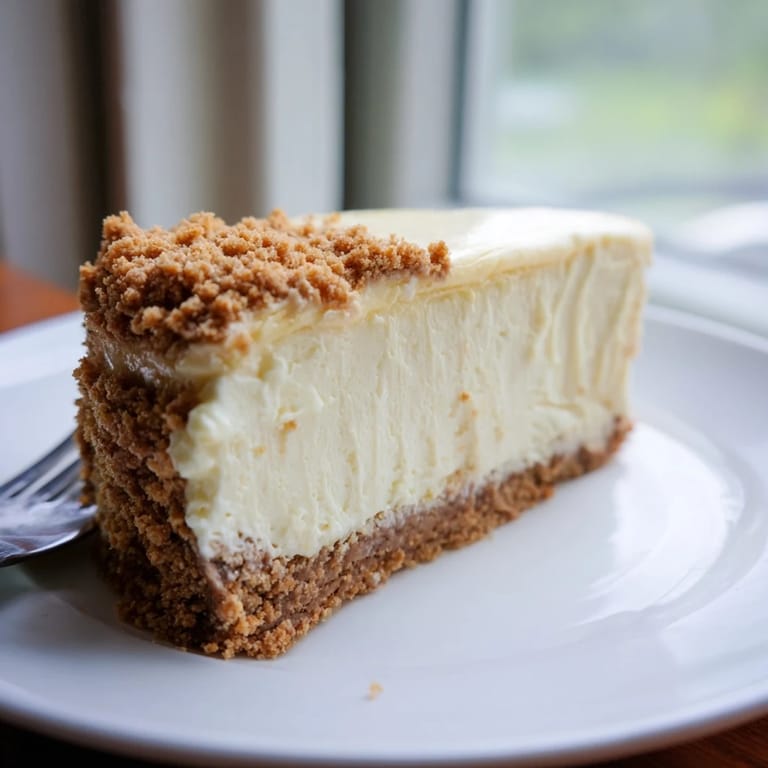
 Cheesecake is one of those desserts that rewards care and precision without demanding perfection. It's a dessert that tastes like comfort and celebration at once, whether you're serving it at a formal dinner or splitting a slice with someone at midnight in your kitchen.
Recipe FAQ
- → What makes the crust ideal for this cheesecake?
The graham cracker crust combines buttery richness and a slight sweetness that balances the creamy filling, offering a firm yet tender base.
- → How does the water bath affect baking?
Baking in a water bath ensures gentle, even heat which prevents cracking and keeps the cheesecake's center smooth and slightly jiggly.
- → Can I prepare this cheesecake in advance?
Yes, chilling overnight enhances the texture and flavor, making it easier to slice and serve the next day.
- → What is the purpose of adding cornstarch?
Cornstarch helps stabilize the filling by gently thickening it, contributing to the cheesecake’s dense but creamy texture.
- → Are there alternatives to the optional sour cream topping?
Fresh berry compote, chocolate swirls, or a dusting of powdered sugar are excellent alternatives to complement the dense filling.