 Pin This
 There's something about the smell of butter and flour toasting in a pan that pulls me right back to a rainy Tuesday afternoon when I decided to stop overthinking dinner and just make mac and cheese from scratch. My roommate wandered into the kitchen asking what smelled so good, and by the time the cheese sauce came together, silky and golden, I realized this wasn't just comfort food—it was the kind of dish that makes people forget they're hungry and just want to sit at the table a little longer.
I'll never forget bringing this to a potluck and watching a usually quiet coworker come back for thirds, sheepishly admitting he'd been eating sad, watery mac and cheese his whole life. His surprise at how creamy and intentional this tasted made me realize that sometimes the simplest dishes deserve the most care.
Ingredients
- Elbow macaroni, 250 g: The small curved shape holds sauce in every bend—use the al dente timing religiously or you'll end up with mush.
- Unsalted butter, 2 tbsp: Unsalted gives you control over the final salt level, which matters more than you'd think.
- All-purpose flour, 2 tbsp: This is your thickener, the quiet hero that keeps everything from becoming a puddle.
- Whole milk, warmed, 500 ml: Warming it first prevents lumps and helps it incorporate smoothly into the roux.
- Sharp cheddar cheese, grated, 200 g: The backbone of flavor—don't skip the sharpness, it makes all the difference against the richness of the sauce.
- Gruyère or mozzarella, 50 g (optional): A secret weapon for extra creaminess that makes people ask what your ingredient is.
- Mustard powder, ½ tsp: Not for heat, but for depth—it rounds out the cheese flavors in a way people can't quite put their finger on.
- Ground black pepper and salt: Taste as you go; the cheese is already salty, so you're really just balancing.
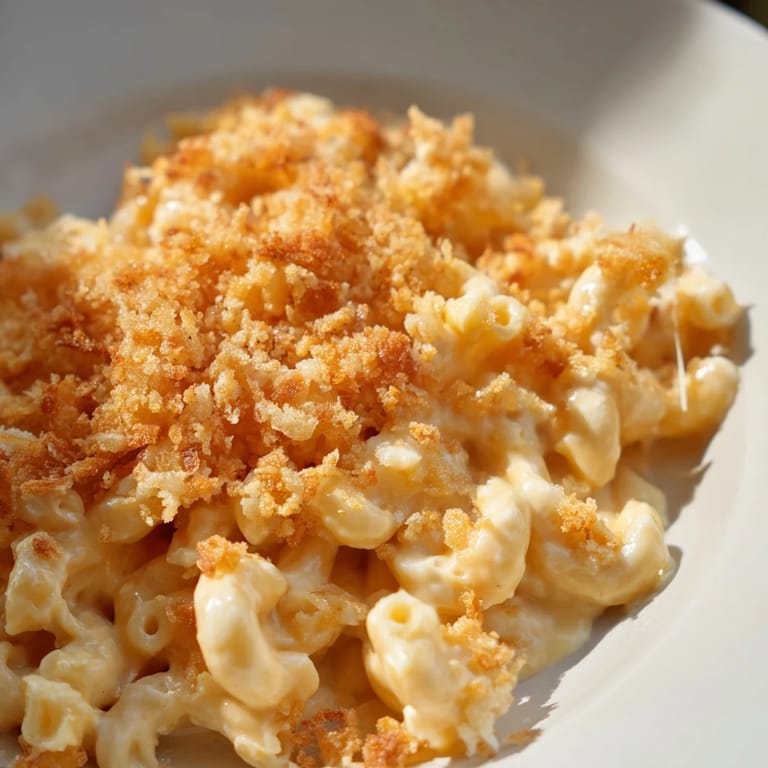
- Panko breadcrumbs, 40 g: The texture contrast between crispy top and creamy pasta is non-negotiable if you're baking this.
- Parmesan cheese, 2 tbsp: A lighter hand here—it's just there to help the breadcrumbs toast golden.
Tired of Takeout? 🥡
Get 10 meals you can make faster than delivery arrives. Seriously.
One email. No spam. Unsubscribe anytime.
Instructions
- Get Your Water Rolling:
- Fill a large pot with salted water—it should taste like the sea—and bring it to a rolling boil. This is where your pasta's flavor starts, not in the cheese sauce.
- Cook the Pasta Right:
- Add the macaroni and pull it out a full minute or two before the box says it's done. It should still have a tiny bit of resistance when you bite it, because it's going to soften more in the sauce.
- Make Your Roux Base:
- In a separate saucepan, melt the butter over medium heat, then add flour and whisk constantly for a minute or two until it smells like toasted grain. Watch it carefully—you want pale golden, not brown, or the flavor turns nutty in the wrong way.
- Coax In the Milk:
- Slowly pour in your warm milk while whisking, breaking up any lumps as they form. It'll go from thick to pourable, and keep stirring until it bubbles gently and coats the back of a spoon.
- Add Your Cheeses:
- Take the pan off heat first, then stir in the grated cheese until completely melted and smooth. Add the mustard powder, pepper, and salt, tasting as you go.
- Combine Everything:
- Fold the drained pasta into the sauce gently, making sure every piece gets coated. If you're serving right away, do it now.
- Bake if You're Going That Route:
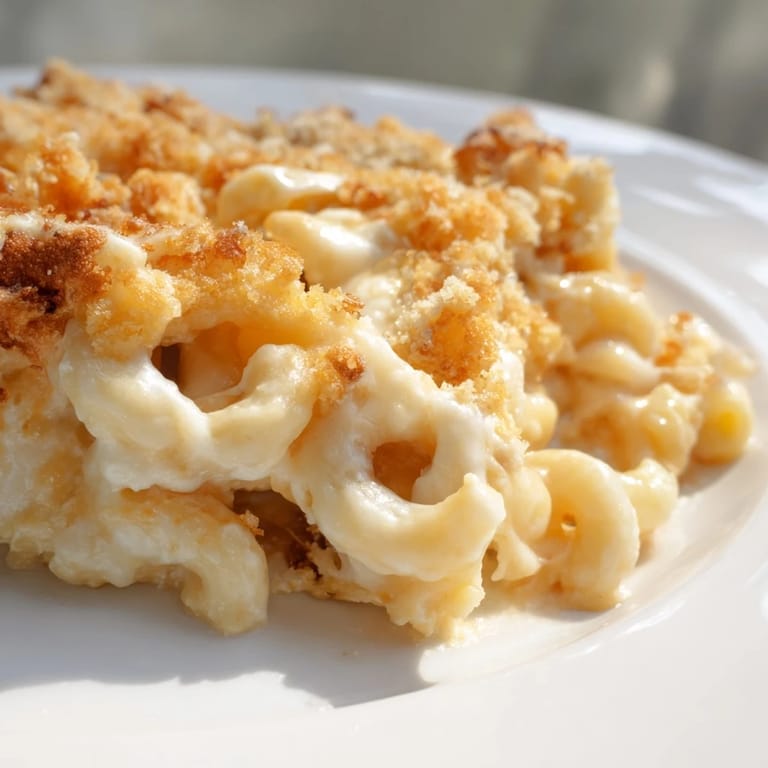
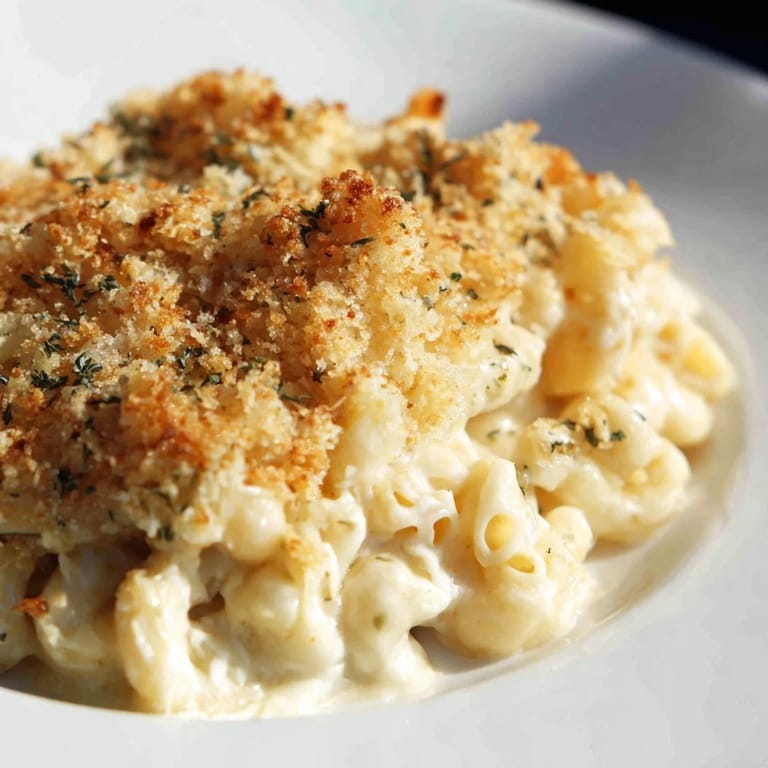
- Pour into a buttered baking dish, mix your breadcrumbs with melted butter and Parmesan, scatter on top, and slide into a 200°C oven for fifteen to twenty minutes until the top is deep golden and crispy.
 Pin This
 The first time I made this for people I actually cared about impressing, I learned that food like this—made with your own hands, not from a box—carries a kind of generosity that people feel even before they taste it. It's in the steam, the effort, the choice to do it right.
Stovetop Versus Oven
If you serve it straight from the pan, it's creamy and immediate, the kind of thing you eat standing up at the stove because you can't wait another second. Baking it transforms it into something else entirely—the top gets shatteringly crisp while the inside stays molten, and it looks like you've been cooking all afternoon. Both are right; it just depends on your mood and your hunger level.
The Flavor Layers
Sharp cheddar does most of the work, but it's the quiet ingredients that make people pause mid-bite and try to figure out what they're tasting. The mustard powder doesn't make it spicy; it makes it more itself, bringing the cheese flavors into focus. The Gruyère, if you use it, adds a subtle sweetness that catches you off guard.
When Things Go Right and When They Don't
I've made this dozens of times now, and I've also broken it. A too-hot roux turns bitter, cold milk creates lumps no whisking can fix, and pasta cooked too far becomes a soft blur instead of something with personality. The victories vastly outnumber the mistakes, and even the mistakes still taste good.
- If your sauce looks thin, keep stirring gently over medium heat for another minute or two—patience thickens it more reliably than panic.
- If you accidentally break the cheese sauce and it gets grainy, strain it through a fine sieve and start over with a fresh roux; it's worth the five minutes.
- Leftovers reheat beautifully with a splash of milk stirred in, and cold mac and cheese for breakfast the next morning is nobody's idea of a failure.
 Pin This
 Mac and cheese is one of those dishes that asks so little and gives back so much, and that's probably why it's been showing up on tables for generations. Make it once with real cheese and real attention, and you'll understand why it matters.