 Pin This
 Last summer, I was tasked with feeding a crowd at my cousin's backyard birthday party, and I had maybe two hours to pull it together. Rather than stress over cooking, I decided to set up a sandwich board—basically a playground for everyone's taste buds—and watched as people's faces lit up when they realized they could build exactly what they wanted. It turned into this beautiful thing where even the pickiest eaters found something that made them happy, and I spent the afternoon watching folks chat and laugh instead of waiting for food.
There's something almost magical about setting a board down on a picnic table and seeing people gravitate toward it like it's treasure. My aunt, who's usually shy at gatherings, spent twenty minutes carefully layering her sandwich and then actually sat down to chat with someone new. Food boards have this quiet power to bring people together in a way that plated meals sometimes don't.
Ingredients
- Ciabatta rolls: Their open crumb structure holds fillings without falling apart, and they toast beautifully if your guests prefer warmth.
- Whole grain sandwich rolls: A heartier option that adds nutty flavor and appeals to the health-conscious without compromising taste.
- Sourdough bread: Its tang cuts through rich meats and creamy spreads, and the chewy texture stands up to generous toppings.
- Smoked turkey breast: Lean and flavorful, it's the gateway meat for people who don't eat a lot of deli options.
- Honey ham: Slightly sweet undertone pairs beautifully with mustard and pickles, balancing savory and bright notes.
- Roast beef: Its umami richness satisfies anyone looking for something more substantial and beefy.
- Salami: A little goes a long way with cured meats, so even a smaller amount adds serious flavor and texture.
- Swiss, cheddar, and provolone: Offering three cheeses means different flavor profiles—Swiss is mild and slightly sweet, cheddar is bold and familiar, provolone adds a subtle tang.
- Tomatoes: Fresh is non-negotiable; slice them right before serving so they don't weep and make bread soggy.
- Cucumber: Its cool crispness refreshes the palate between bites of rich meats and cheese.
- Red onion: Thin slices add bite and color; some guests will ask for extra, others none, which is the beauty of a board.
- Romaine lettuce: Crisp leaves provide structure and prevent fillings from sliding, plus they're sturdy enough to handle toppings.
- Baby spinach: A quieter vegetable that adds nutrition without overwhelming anyone who's not expecting it.
- Avocado: Slice just before guests arrive so it doesn't brown; it transforms a simple sandwich into something luxurious.
- Dill pickle slices: Acidity brightens every bite and adds textural contrast you didn't know you needed.
- Mayonnaise: The creamy base that holds everything together and adds richness without requiring much.
- Dijon mustard: Sharp and sophisticated, it cuts through fat and adds complexity even in small amounts.
- Hummus: A plant-forward option that works brilliantly for vegetarian guests and adds protein quietly.
- Pesto: A small amount scattered on bread elevates a simple sandwich into something restaurant-worthy.
- Honey mustard: Slightly sweet and mellow, it appeals to people who find straight mustard too aggressive.
- Black olives: Briny and satisfying, they're that salty element that makes people reach for another bite.
- Banana pepper rings: Milder than jalapeños, they add vinegary heat without intimidating anyone.
- Sun-dried tomatoes: Concentrated tomato flavor in a chewy package; a little brings big taste.
Tired of Takeout? 🥡
Get 10 meals you can make faster than delivery arrives. Seriously.
One email. No spam. Unsubscribe anytime.
Instructions
- Choose your canvas:
- Arrange all three breads across a large board or tray, leaving a little space between them so guests can clearly see their options. Think of it like setting out paints before a painting.
- Build the meat and cheese zone:
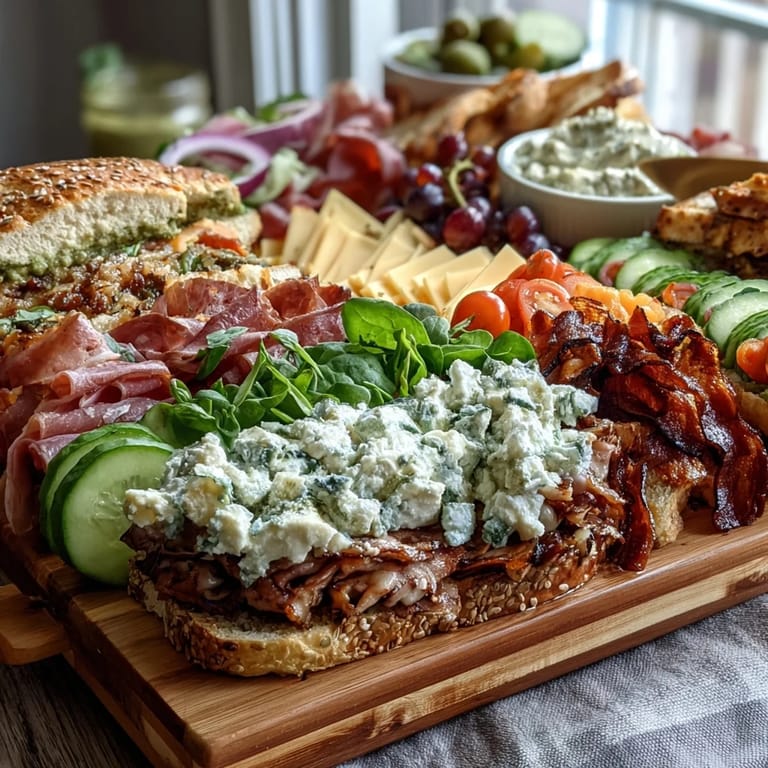
- Group your four deli meats in neat piles, then line up the three cheeses next to them—it's easier on the eyes and faster for people to grab what they want. Make sure slices aren't overlapping too much or they'll stick together.
- Create the vegetable garden:
- Arrange tomatoes, cucumbers, onions, lettuce, spinach, avocado, and pickles in small bowls or directly on the board in clusters. Keeping them separate prevents flavors from mingling before someone's ready to layer them.
- Set up the flavor station:
- Spoon each spread and condiment into its own small bowl with a dedicated spoon or knife—this prevents cross-contamination and lets people taste before committing. Clearly the condiments in a row so guests don't miss the pesto hiding at the end.
- Add the finishing touches:
- Scatter olives, banana peppers, and sun-dried tomatoes in small bowls around the board's edges. These are the secret ingredients that make someone say, "Oh, I didn't expect this," in the best way.
- Invite the magic:
- Once everyone's gathered, tell them to layer from the bottom up—spread on bread, then meats, cheese, vegetables, and a final flourish of extras. The real cooking happens in each person's hands.
 Pin This
 There was this one moment at a friend's birthday party where a five-year-old, who'd been picky about food his whole life, built his first sandwich from this board. He carefully selected roast beef, cheddar, tomato, and just a tiny dab of honey mustard, then sat down and ate the whole thing without complaint. His mom's eyes got a little watery, and I realized this wasn't just about feeding people—it was about giving them permission to make their own choices and, somehow, feel proud of them.
Making It Ahead
The magic of a sandwich board is that you can prepare almost everything the night before. Wash and store vegetables separately in airtight containers, arrange the meats and cheeses on a platter and cover with plastic wrap, and keep your spreads in their jars. On the day of serving, all you're really doing is unpacking and arranging—the actual assembly happens in real time, which keeps everything fresh and gives your guests something to do together.
Feeding Different Crowds
I've learned that a sandwich board is incredibly adaptable. For vegetarians, I swap out the meats and add grilled zucchini, roasted red peppers, marinated artichokes, and hard-boiled eggs sliced thin. Gluten-free guests get their own section with gluten-free bread, which only takes up a little space but means everyone's included. The beauty of this format is that you're not cooking separate meals—you're just expanding the options and letting people choose what speaks to them.
Transport and Storage Tips
If you're taking this to a picnic or party away from home, pack components in separate containers and assemble on-site—bread stays crisp, vegetables don't wilt, and spreads don't seep into everything. Keep perishables in a cooler with ice packs, and if you're arriving more than an hour early, unpack things just before people gather so everything's at its freshest and most appetizing.
- Layer parchment paper between deli meat slices to keep them from sticking together during transport.
- Pack spreads in mason jars with tight lids to prevent leaks in your cooler or car.
- Bring a damp paper towel in a sealed bag for guests to wipe their hands after building their sandwiches.
 Pin This
 A sandwich board is less about precision and more about generosity—it's an invitation for people to gather, choose, and create something that's exactly right for them. Whenever I set one up now, I think less about whether everything's perfectly arranged and more about whether people are going to enjoy the choosing.
Recipe FAQ
- → What breads work best for this sandwich board?
Ciabatta rolls, whole grain sandwich rolls, and sourdough slices provide diverse textures and flavors to please varied preferences.
- → How should the vegetables be prepared?
Fresh vegetables like tomatoes, cucumbers, and red onions should be thinly sliced for easy layering, while leafy greens are separated for freshness.
- → Can I prepare this in advance?
Yes, arrange all components separately and refrigerate. Assemble sandwiches just before serving to maintain freshness.
- → What are good spread options to include?
Mayonnaise, Dijon mustard, hummus, pesto, and honey mustard offer a variety of creamy and tangy flavors to complement meats and vegetables.
- → How can this board cater to vegetarians?
Offer grilled vegetables, sliced hard-boiled eggs, or plant-based deli slices alongside the breads and cheeses for satisfying vegetarian options.