 Pin This
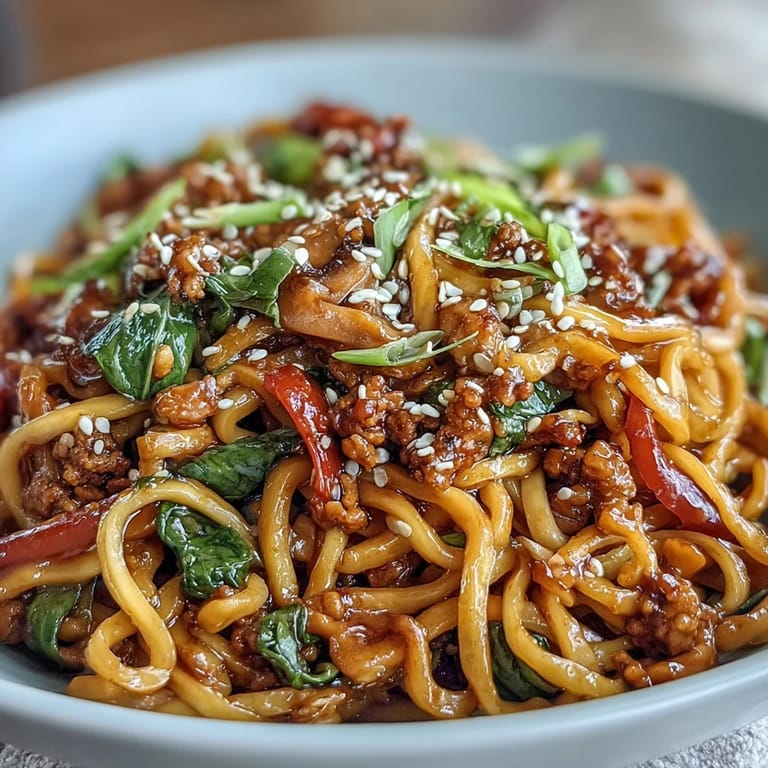
 My friend texted me at 4 PM on a Tuesday asking if I could make dinner in under an hour. I had ground turkey thawing on the counter and remembered watching someone toss noodles in a wok with this incredible gochujang-based sauce on a cooking show months back. That night, Korean Turkey Fried Noodles became my go-to weeknight savior, and it's been that way ever since. The combination of sweet, spicy, and savory all tangled up with tender vegetables and bouncy noodles just works.
I made this for my parents last spring when they visited, and my mom kept asking for the recipe three bites in. She's not easily impressed with fusion dishes, but something about how the gochujang and sesame oil melded together changed her mind. I still remember her saying it tasted like takeout but felt like home cooking, which might be the nicest thing she's said about any dish I've made.
Ingredients
- Fresh or dried wheat noodles (300 g): Udon or ramen work beautifully here because they hold up to tossing without breaking apart, and they have that satisfying chew you want in a stir-fry.
- Soy sauce (3 tbsp): The backbone of the sauce, bringing umami and saltiness that keeps everything from tasting one-dimensional.
- Gochujang (2 tbsp): This fermented Korean chili paste is where the magic happens—it's spicy, funky, and slightly sweet all at once, so don't skip it or use sriracha as a substitute.
- Brown sugar (1 tbsp): A small amount balances the heat and salt, making the sauce come alive on your palate.
- Rice vinegar (1 tbsp): Adds brightness that cuts through the richness and keeps the dish from feeling heavy.
- Sesame oil (1 tbsp): Toasted sesame oil, not plain, gives you that signature nutty aroma that makes people ask what smells so good.
- Ground turkey (400 g): Leaner than beef or pork, it stays tender when cooked quickly and absorbs all the sauce flavors without overpowering them.
- Vegetable oil (2 tbsp): Use a neutral oil with a high smoke point so your wok stays hot and everything cooks fast.
- Garlic and ginger (3 cloves and 1 tbsp): These two are non-negotiable—they're the aromatic foundation that makes this taste authentically Korean-inspired.
- Yellow onion (1 medium): Slices thin so it softens quickly but keeps a slight bite, adding sweetness and structure to the dish.
- Carrot (1 medium): Julienne it so it cooks in the same time as everything else and looks appealing in the bowl.
- Red bell pepper (1 medium): Brings color and a subtle sweetness that rounds out the vegetables.
- Shiitake mushrooms (100 g): They add umami and a meaty texture that makes this feel more substantial than just noodles and turkey.
- Spring onions: Use them twice—some tossed in at the end and fresh ones as garnish for a fresh, sharp note.
- Toasted sesame seeds (1 tbsp): These aren't just decoration; they add a nutty crunch that changes the whole texture experience.
Tired of Takeout? 🥡
Get 10 meals you can make faster than delivery arrives. Seriously.
One email. No spam. Unsubscribe anytime.
Instructions
- Get your noodles ready:
- Cook them according to the package instructions, then drain and rinse with cold water to stop them from cooking further and to prevent them from sticking together. Set them aside while you tackle everything else.
- Mix the sauce:
- In a small bowl, whisk together soy sauce, gochujang, brown sugar, rice vinegar, and sesame oil until the gochujang is completely dissolved and you have a smooth, glossy sauce. This is the moment to taste it and adjust—if it's too spicy, add a touch more brown sugar; if it's not spicy enough, a pinch of chili flakes will fix it.
- Brown the turkey:
- Heat 1 tbsp of vegetable oil in your wok or large skillet over medium-high heat until it's shimmering, then add the ground turkey. Break it apart with a wooden spoon as it cooks, letting it get golden and cooked through, which takes about 5 minutes. You want it browned but not dry, so don't overcook it.
- Sauté the aromatics and vegetables:
- Push the cooked turkey to the side, add the remaining 1 tbsp of oil, then add minced garlic and ginger and let them bloom for 30 seconds until fragrant. Toss in your onion, carrot, bell pepper, and mushrooms, stirring constantly for 3 to 4 minutes until they're just tender but still have a little bite.
- Bring it all together:
- Return the turkey to the pan with the vegetables, add your cooked noodles and the sauce, then toss everything over high heat for 2 to 3 minutes until the noodles are coated and everything is heated through. The whole pan should look glossy and smell absolutely incredible.
- Finish and serve:
- Stir in your sliced spring onions off the heat, then divide into bowls and top with toasted sesame seeds and extra spring onion slices. Serve immediately while everything is still warm and the noodles have that perfect texture.
 Pin This
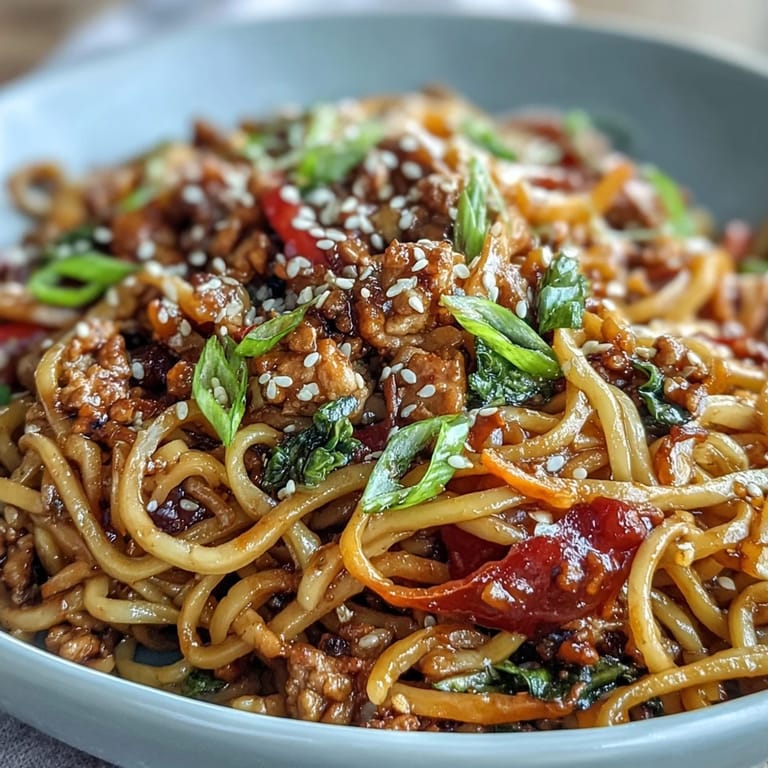
 There's something about noodles that make people happier instantly. My roommate came home one night when I was making this, and before she even sat down, she asked if there was enough for her too—there was, and we ended up eating it straight from the wok while catching up about our days, which somehow tasted better than eating it at the table.
Why This Sauce Works So Well
The first time I made this, I tried to simplify the sauce by using just soy sauce and sriracha, and it was flat. The gochujang brings this deep, fermented complexity that sriracha just doesn't have, and the brown sugar isn't overkill—it's there to soften the edge of the paste and make the sauce feel balanced. Rice vinegar adds a brightness that keeps it from being heavy, and sesame oil ties everything together with that toasted aroma. It's the kind of sauce that tastes simple on the surface but has layers when you actually pay attention.
Making It Your Own
I've made this recipe at least twenty times, and I've never made it the same way twice. Sometimes I add snap peas or spinach at the last second; sometimes I throw in a sliced chili if I want more heat. One night I was out of mushrooms, so I added extra bell pepper and it was just as good. The beauty of a stir-fry is that it's flexible enough to work with whatever you have on hand, as long as you stick with the sauce and the noodles as your base. The recipe is a guide, not a rule—use it as a starting point and let your pantry and mood guide you from there.
 Pin This
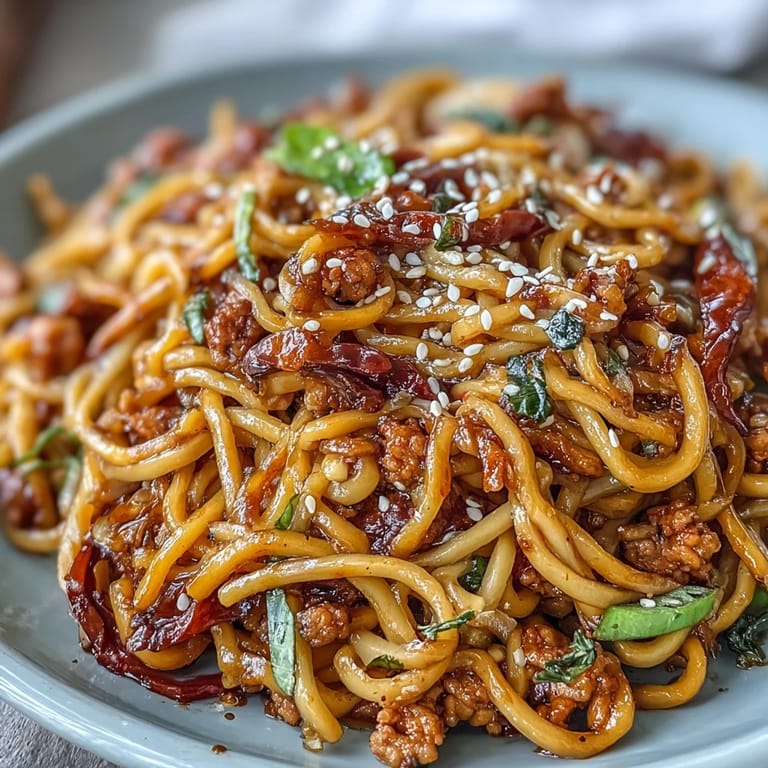
 This dish has become my answer to the question, "What should we make for dinner?" because it's fast, it's delicious, and it makes your kitchen smell like somewhere magical. Make it this week and you'll understand why.
Recipe FAQ
- → Can I use different noodles?
Yes, udon, ramen, or even spaghetti work well. Fresh noodles yield the best texture, but dried noodles are perfectly suitable when cooked according to package directions.
- → Is this dish very spicy?
The gochujang provides mild to moderate heat. For more spice, add sliced fresh chilies or chili flakes. The sweetness from brown sugar balances the heat nicely.
- → Can I make this ahead?
Prep vegetables and sauce in advance. Cook everything just before serving for the best texture. Leftovers keep refrigerated for 2-3 days and reheat well in a wok.
- → What protein alternatives work?
Ground chicken, beef, or pork substitute seamlessly. For a vegetarian version, use crumbled tofu or tempeh with extra vegetables like bok choy or snap peas.
- → What should I serve with this?
Fresh kimchi adds authentic Korean flavor and crunch. A simple cucumber salad with rice vinegar complements the rich noodles. Light lager or chilled soju make traditional beverage pairings.