 Pin This
 My neighbor Marcus showed up one summer evening with a bottle of rum and a story about his family's kitchen in Jamaica, where his grandmother would coat everything in this particular blend of spices that somehow smelled like a warm breeze mixed with a campfire. He watched me struggle through a bland pork tenderloin dinner and just shook his head, then spent the next hour teaching me how jerk marinade isn't just heat—it's this incredible conversation between sweet, spicy, earthy, and bright all at once. That night changed how I think about seasoning meat entirely.
I made this for a dinner party once when I was trying to impress someone who said they'd 'had real Caribbean food,' and I was genuinely nervous until the first person took a bite and just closed their eyes like they were somewhere else entirely. That's when I realized this dish isn't showing off—it's sharing something that actually matters, and the confidence in the flavors speaks louder than any fancy technique.
Ingredients
- Pork tenderloin, 1 ½ lbs trimmed: This cut is naturally lean and cooks fast, so you get that precious window where it's caramelized outside but still juicy inside—don't skip the trimming step because the silver skin will stay tough no matter what you do.
- Olive oil, 2 tablespoons: It carries all those aromatic spices and helps the marinade cling to the meat while it roasts.
- Soy sauce, 3 tablespoons: Use gluten-free tamari if you need to, and this is your umami backbone that makes the whole thing taste deeper and more complex.
- Fresh lime juice, 2 tablespoons: The acidity wakes up the pork and balances all that richness—bottled lime juice just won't give you the same brightness.
- Brown sugar, 2 tablespoons: A little sweetness keeps things from being one-note spicy and helps with that gorgeous caramelization.
- Green onions, 3 chopped: They add a fresh sharpness that cuts through the heat in the best way.
- Garlic, 2 cloves minced: Fresh is non-negotiable here because jarred garlic tastes stale against these bold spices.
- Fresh ginger, 1 tablespoon grated: This is what gives jerk its distinctive warmth and subtle sweetness that sneaks up on you.
- Scotch bonnet pepper, 1 seeded and finely chopped: Yes, wear gloves, and yes, this is the real deal—if you're nervous, start with half and taste, because these peppers don't hold back.
- Ground allspice, 1 teaspoon: This is the spice that actually makes jerk taste like jerk, with that warm peppery-clove note that's almost impossible to replicate.
- Dried thyme, 1 teaspoon: Caribbean cooking relies on thyme in a way that feels almost sacred, and it adds an herbaceous depth.
- Ground cinnamon, 1 teaspoon: Just enough to remind you this is sweet and spicy at the same time, not just heat.
- Ground nutmeg, ½ teaspoon: A whisper of this goes a long way and ties everything together with a subtle warmth.
- Kosher salt, 1 teaspoon and black pepper, ½ teaspoon: Season boldly because the pork is a blank canvas and these spices need grounding.
Tired of Takeout? 🥡
Get 10 meals you can make faster than delivery arrives. Seriously.
One email. No spam. Unsubscribe anytime.
Instructions
- Build your spice paste:
- Throw your olive oil, soy sauce, lime juice, brown sugar, green onions, garlic, ginger, Scotch bonnet, allspice, thyme, cinnamon, nutmeg, salt, and pepper into a blender or food processor and blend until it's smooth and the color deepens into a beautiful rust-brown. You're looking for a paste, not a sauce, so if it's too wet, you can blend longer to release the oils from the spices.
- Coat the pork:
- Pat your pork tenderloin completely dry with paper towels because moisture is the enemy of a good sear, then place it in a large resealable bag or shallow dish and pour that glorious marinade all over it, turning a few times to make sure every side is covered. If you have the patience, let it sit in the fridge overnight, but even two hours will transform it—the spices start breaking down the proteins and infusing everything with flavor.
- Get your oven ready:
- Crank the oven to 425°F and line a baking sheet with foil or parchment paper so cleanup is easy and the heat reflects evenly. A hot oven is key here because you want that fast caramelization on the outside.
- Sear and roast:
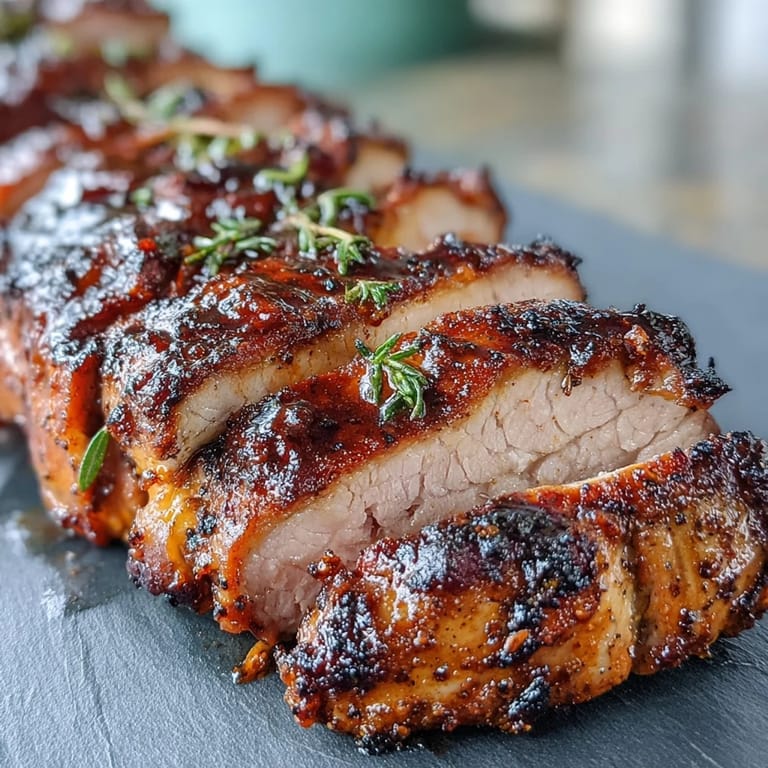
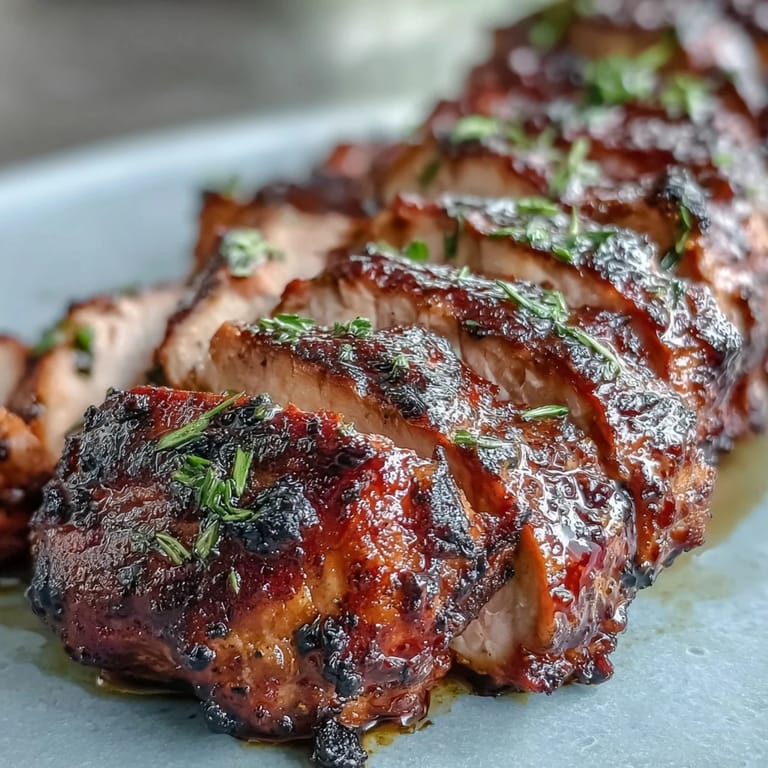
- Pull the pork from the marinade, let the excess drip off, and place it on your prepared sheet, then roast for twenty to twenty-five minutes, turning it halfway through so both sides get that beautiful crust. You're aiming for an internal temperature of one hundred forty-five degrees Fahrenheit, so grab a meat thermometer—it's the only way to guarantee you're hitting that sweet spot between caramelized and still tender.
- Rest and slice:
- Transfer the pork to a cutting board, tent it loosely with foil, and let it sit for five to ten minutes while the juices redistribute themselves back into the meat. This step is what separates a dry pork tenderloin from an absolutely succulent one.
- Finish and serve:
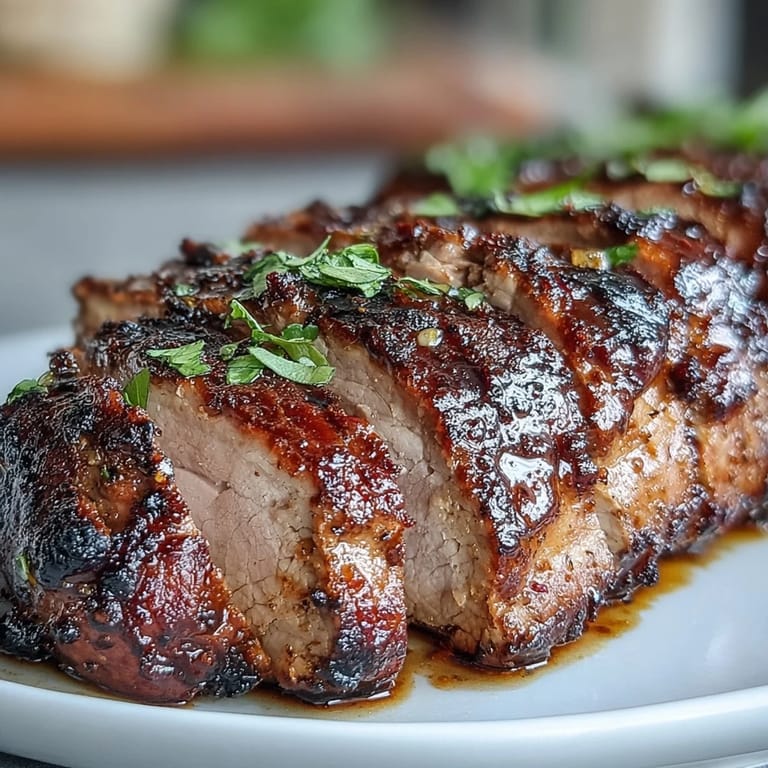
- Slice it against the grain into quarter-inch pieces and plate it up however makes you happy—rice and peas, grilled vegetables, mango salsa, or just with a lime wedge to squeeze over the top.
 Pin This
 There was this one Tuesday night when I made this for my kids, and my youngest, who normally won't eat anything 'too spicy,' asked for seconds and kept calling it 'the magic pork.' That moment of watching someone discover they actually love something bold and different is exactly why I keep coming back to this recipe.
The Story Behind Jerk Seasoning
Jerk isn't just a flavor profile—it's a centuries-old cooking method from Jamaica where pigs were cooked low and slow with aromatic wood smoke and these specific spices that made the meat last longer and taste unforgettable. When I learned that, it changed how I approached this recipe from just 'making something tasty' to understanding I was cooking with actual history and purpose. The allspice, the thyme, the slow approach to seasoning—it all comes from real tradition, which somehow makes the food taste even better.
Make It Your Own
The beauty of jerk is that it's actually flexible despite how bold it seems—if you're heat-sensitive, start with a jalapeño instead of the Scotch bonnet, or even just half of one, and taste as you go. I've also played with adding a tablespoon of dark rum to the marinade, which adds this subtle sweetness and complexity that makes people ask what your secret ingredient is. Some nights I finish the roasted pork on a screaming hot grill for a couple minutes per side because that direct flame adds a char that takes it from good to unforgettable.
Pairing and Serving Ideas
This pork deserves sides that either cool it down or complement the heat, and I've learned that rice and peas is the classic for a reason—the coconut milk and the mild spices balance everything perfectly. I also love serving it with grilled pineapple or mango salsa because the fruit brings this brightness that makes every bite feel complete, and if you want a drink, go crisp and cold with a Sauvignon Blanc or an ice-cold lager because you want something that refreshes between bites.
- Serve it warm or even at room temperature the next day, and it's incredible on top of a grain bowl with avocado and lime crema.
- Leftovers shred beautifully for jerk pork tacos or over rice as a quick lunch.
- If you double the marinade, you can keep some in the fridge and use it for chicken or fish within a couple of days.
 Pin This
 This dish became a regular in my kitchen because it proves that bold flavors and actual ease don't have to be at odds. Give it a try and see where it takes you.
Recipe FAQ
- → What cut of pork is best for this dish?
Pork tenderloin is preferred for its tenderness and quick cooking time, ensuring juicy results.
- → Can I adjust the spice level?
Yes, substitute the Scotch bonnet pepper with a milder chili like jalapeño to reduce heat.
- → How long should the pork marinate?
Marinating for at least two hours, preferably overnight, allows the flavors to deeply infuse.
- → What cooking temperature is recommended?
Roast the pork at 425°F (220°C) until it reaches an internal temperature of 145°F (63°C) for optimal juiciness.
- → What are good side dishes to serve with it?
Rice and peas, grilled vegetables, or mango salsa complement the bold spices perfectly.