 Pin This
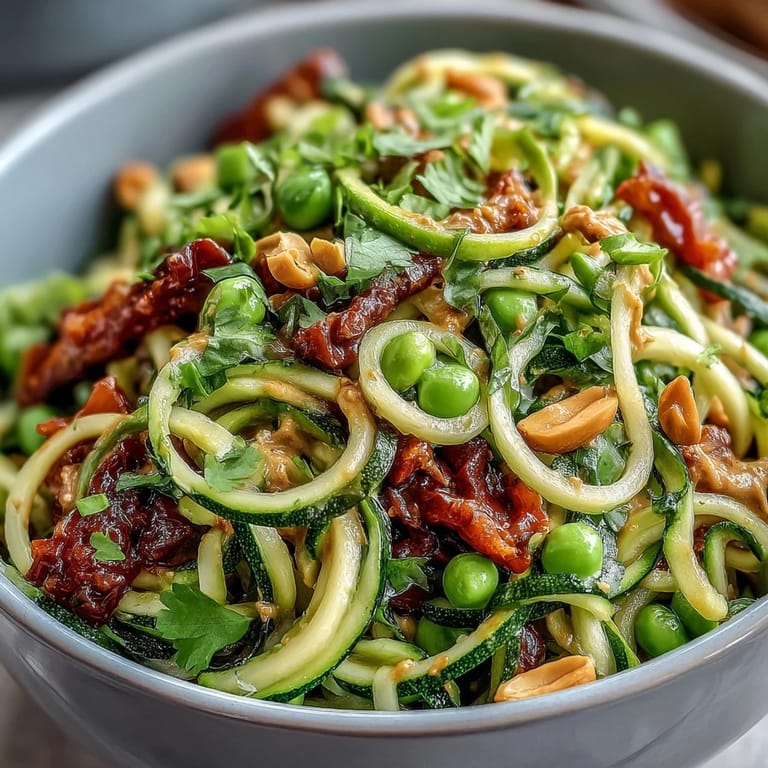
 One Tuesday evening, I stood in my kitchen staring at a pile of zucchinis from the farmer's market, wondering how I'd possibly use them before they went soft. My spiralizer had been gathering dust for months, so I dusted it off and suddenly had these beautiful green noodles piled on my cutting board. That night, a quick stir-fry with peanut sauce changed everything—turns out zucchini noodles weren't just a health trend, they were genuinely delicious when treated right.
I made this for my friend who'd recently gone vegetarian, and watching her face light up when she realized how satisfying the meal was meant something to me. She went home and bought her own spiralizer that weekend, which felt like the highest compliment I could get.
Ingredients
- Zucchini, spiralized (4 medium, about 6 cups): The star of the show—spiralizing creates tender noodles that cook in minutes, but don't overdo them or they'll turn mushy and release water.
- Red bell pepper (1 large, thinly sliced): Adds sweetness and crisp texture that contrasts beautifully with the soft noodles.
- Carrot, julienned (1 large): Brings earthiness and a subtle crunch that holds up through cooking.
- Snap peas (1 cup, trimmed and halved): These stay crisp and add a fresh pop of color and texture.
- Green onions (2, thinly sliced): Use most as garnish but reserve a handful for the pan to infuse the stir-fry with mild onion flavor.
- Fresh cilantro (2 tablespoons, chopped): Optional but worth it—it brightens everything and tastes like a finishing flourish.
- Natural peanut butter (1/3 cup): Look for the kind with just peanuts and salt; the oils rising to the top mean it's real.
- Low-sodium soy sauce or tamari (2 tablespoons): Tamari is your gluten-free friend if you need it, and low-sodium lets you control the saltiness.
- Rice vinegar (1 tablespoon): The subtle tang keeps the sauce from being too heavy.
- Lime juice (1 tablespoon): Squeeze it fresh if you can—bottled just doesn't have the same brightness.
- Maple syrup or honey (1 tablespoon): A touch of sweetness balances the savory and tangy notes.
- Toasted sesame oil (2 teaspoons): Just a little goes a long way; the toasted kind has more flavor than regular.
- Garlic, minced (2 cloves): Mince it right before cooking so you get maximum punch of flavor.
- Fresh ginger, grated (1 teaspoon): Use a microplane and grate it directly into your sauce bowl for the brightest taste.
- Warm water (2–4 tablespoons): Start with less and add gradually to get the sauce consistency exactly how you like it.
- Crushed red pepper flakes (1/2 teaspoon, optional): For heat lovers—add it to the sauce or sprinkle on individual servings so everyone can control their spice level.
- Roasted peanuts, chopped (2 tablespoons): The garnish adds the satisfying crunch that makes the dish feel complete.
Tired of Takeout? 🥡
Get 10 meals you can make faster than delivery arrives. Seriously.
One email. No spam. Unsubscribe anytime.
Instructions
- Prep everything first:
- Spiralize your zucchinis and carrots, then slice the peppers and snap peas—having everything ready means the actual cooking is just minutes.
- Make your sauce:
- Whisk together the peanut butter, soy sauce, vinegar, lime juice, maple syrup, sesame oil, garlic, and ginger in a bowl. Start with 2 tablespoons of warm water and whisk until smooth, then add more water a tablespoon at a time until it's pourable like a thick salad dressing.
- Get your pan hot:
- Place a large nonstick skillet or wok over medium-high heat and let it warm for a minute or two—you want it hot enough that the vegetables sizzle when they hit the pan.
- Cook the sturdy vegetables first:
- Add the bell pepper, carrot, and snap peas to the hot pan and stir-fry for 2–3 minutes, tossing frequently so they cook evenly but stay crisp and bright.
- Add the zucchini noodles gently:
- Gently add the spiralized zucchini and toss everything together for 2–3 minutes just until heated through—this is the moment to resist the urge to keep cooking because zucchini releases water when overcooked and you'll end up with a soggy mess.
- Coat everything in sauce:
- Pour the peanut sauce over the vegetables and toss until every strand of noodle is coated, cooking for another 1–2 minutes until warm.
- Finish and serve:
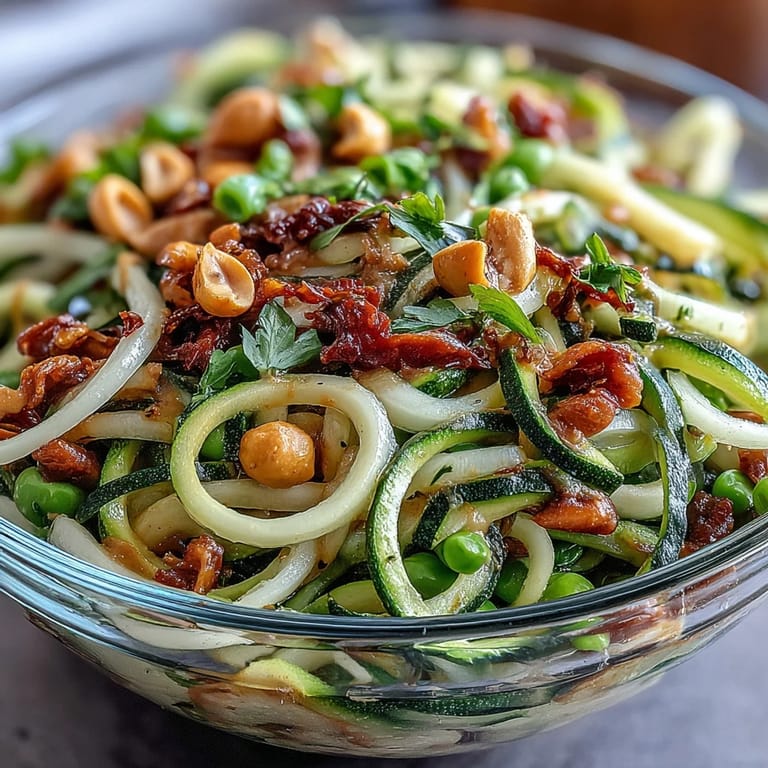
- Remove from heat, garnish with chopped peanuts, green onions, and cilantro if using, and serve immediately while it's still hot and the noodles have that perfect tender texture.
 Pin This
 My mom tried this when she was skeptical about zucchini noodles in general, and she asked me to write down the recipe before she even finished eating. That's when I knew it wasn't just healthy food pretending to be good—it was genuinely craveable.
The Science of Not Overcooking Zucchini Noodles
Zucchini is about 95 percent water, so high heat and a quick cook time are your best friends. The moment the noodles turn from bright green to a softer, paler shade, they're done—push past that point and they'll start weeping, turning your beautiful stir-fry into a watery mess. I learned this the hard way after leaving my noodles in the pan for five full minutes while I chased my cat away from the counter.
How to Make the Peanut Sauce Creamy Without Cream
The secret is the ratio of peanut butter to warm water—start conservative and add water slowly while whisking so the peanut butter fully incorporates and becomes silky rather than gritty. If you add all the water at once, you'll end up with a separated mess that tastes bitter. The sesame oil and a touch of maple syrup also add richness that makes it feel indulgent even though there's no cream involved.
Make It Yours
This recipe is genuinely flexible, which is part of why it's become my go-to weeknight dinner. I've thrown in mushrooms when bell peppers weren't available, swapped cilantro for basil when I had it on hand, and even added shrimp on nights when I wanted extra protein. The peanut sauce works with almost any vegetable combination you can think of, and that versatility means it never feels boring even when you make it twice a week.
- Top with grilled chicken, tofu, shrimp, or tempeh for added protein without changing the flavor profile.
- Swap the peanut butter for almond or sunflower seed butter if you need to avoid peanuts or tree nuts.
- Make it ahead by preparing vegetables in the morning, but wait to spiralize zucchini until right before cooking to keep them from getting watery.
 Pin This
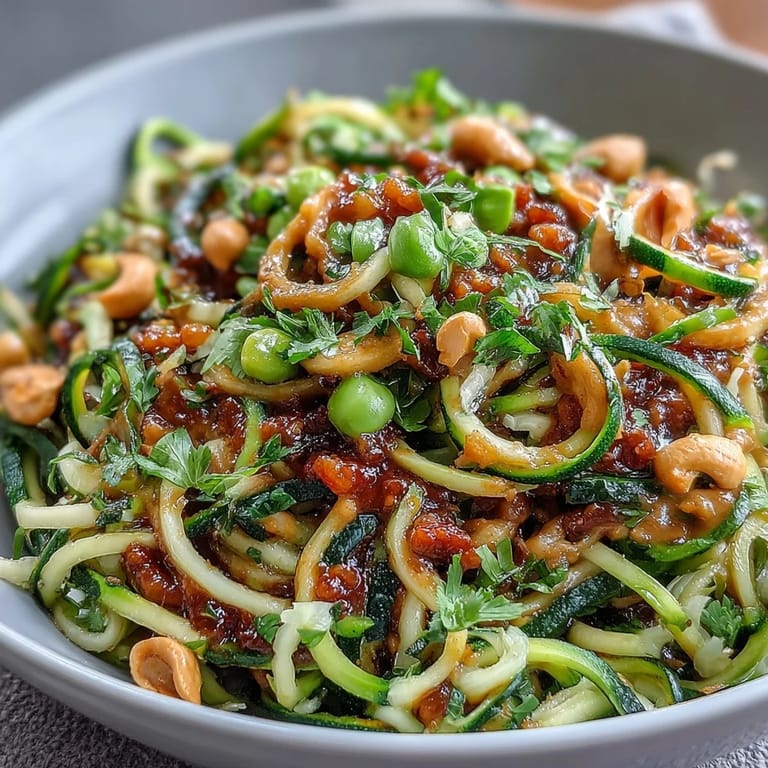
 This dish has become the recipe I make when I want to feel good about what I'm eating and not sacrifice flavor or satisfaction. It's proof that healthy and delicious aren't opposing forces—they're just waiting for the right recipe to bring them together.
Recipe FAQ
- → How do I prevent zucchini noodles from becoming soggy?
To keep the zucchini noodles firm, stir-fry them briefly over medium-high heat and avoid overcooking. Adding them last and cooking for 2-3 minutes ensures they stay crisp.
- → Can I substitute peanut butter with another nut butter?
Yes, almond or cashew butter work well as alternatives for those avoiding peanuts, offering similar creaminess and flavor.
- → What should I use to make the sauce thinner if needed?
Warm water can be added gradually to the peanut sauce to reach your desired consistency without diluting the flavor.
- → Are there any protein options to add to this dish?
Grilled tofu, chicken, or shrimp are great additions to boost protein while keeping the dish balanced and tasty.
- → How can I make this dish soy-free?
Using coconut aminos instead of soy sauce or tamari will keep the sauce flavorful while removing soy elements.