 Pin This
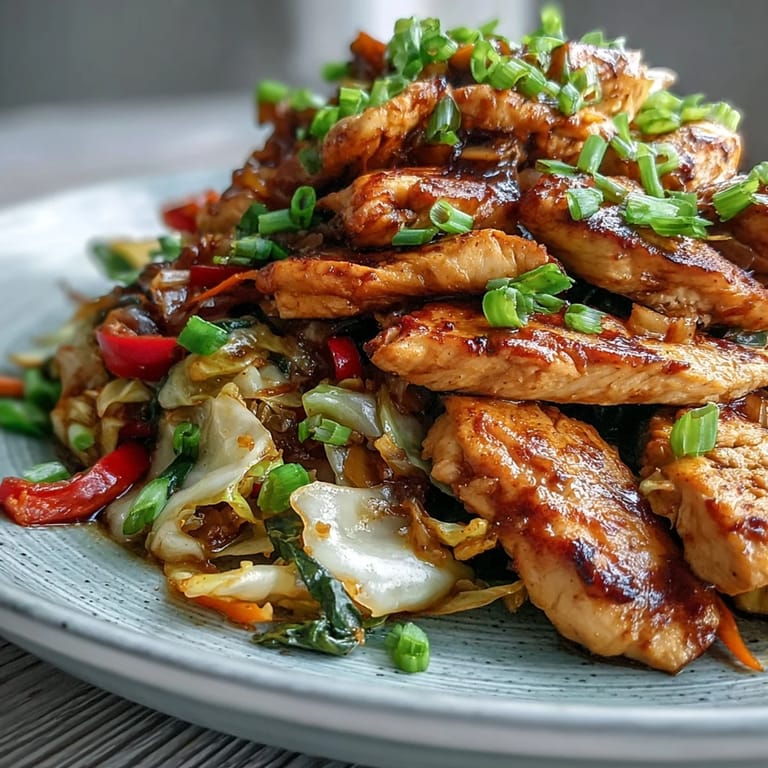
 My stove was covered in splatter marks and I had exactly twenty minutes before everyone got home. I grabbed the half cabbage sitting in the crisper, some chicken thighs from the freezer door, and decided to just go for it. The smell of garlic hitting hot oil filled the kitchen so fast I cracked a window. That night taught me that speed and flavor don't have to be enemies.
I made this on a Tuesday when my neighbor dropped off a huge cabbage from her garden. She laughed when I told her I'd never cooked a whole one before. By Wednesday, I'd made it twice because my kids kept asking if we could have the chicken cabbage thing again. It became our unofficial midweek reset meal.
Ingredients
- Boneless, skinless chicken breast or thighs (500 g): Thighs stay juicier and handle high heat better, but breasts work if you slice them thin and don't overcook.
- Green cabbage (1 small head, about 600 g): The sturdy leaves soften just enough while keeping a slight crunch, and they soak up the sauce like a sponge.
- Carrot (1 medium, julienned): Adds a touch of sweetness and a pop of color that makes the whole dish look alive.
- Red bell pepper (1, thinly sliced): It chars a little at the edges and brings a smoky sweetness that balances the soy.
- Green onions (3, sliced): Toss them in at the end so they stay bright and grassy.
- Soy sauce (3 tbsp): The backbone of the sauce, use tamari if gluten is a concern and it works just as well.
- Oyster sauce (1 tbsp): This is where the deep umami comes from, a little goes a long way.
- Hoisin sauce (1 tbsp): It adds a hint of sweetness and complexity without making things sticky.
- Rice vinegar (1 tbsp): Cuts through the richness and wakes everything up.
- Sesame oil (2 tsp): Just a drizzle gives you that toasted, nutty aroma you smell at good noodle shops.
- Cornstarch (2 tsp): Mixed with water, it thickens the sauce so it hugs the chicken instead of pooling at the bottom.
- Water (2 tbsp): Loosens the cornstarch and helps the sauce come together smoothly.
- Sugar (1 tsp): Balances the salt and brings out the natural sweetness in the vegetables.
- Vegetable oil (2 tbsp): High smoke point and neutral flavor let the other ingredients shine.
- Garlic (3 cloves, minced): The first thing you smell when it hits the pan, and it sets the tone for everything.
- Fresh ginger (1 inch piece, grated): Bright and spicy, it cuts through the soy and makes the whole dish feel alive.
Tired of Takeout? 🥡
Get 10 meals you can make faster than delivery arrives. Seriously.
One email. No spam. Unsubscribe anytime.
Instructions
- Mix the Sauce:
- In a small bowl, whisk together soy sauce, oyster sauce, hoisin sauce, rice vinegar, sesame oil, cornstarch, water, and sugar until smooth. Set it aside so the cornstarch doesn't settle.
- Cook the Chicken:
- Heat 1 tablespoon vegetable oil in a large skillet or wok over medium high heat, add the sliced chicken, and cook for 4 to 5 minutes until golden and cooked through. Remove it from the pan and set aside.
- Sauté the Aromatics:
- Add the remaining tablespoon of oil to the same pan, toss in the minced garlic and grated ginger, and stir for 30 seconds until the kitchen smells amazing. Don't let them burn or they'll turn bitter.
- Stir Fry the Vegetables:
- Add the cabbage, carrot, and bell pepper to the pan and stir fry for 3 to 4 minutes until they're tender but still have some bite. The cabbage will shrink down fast so don't worry if it looks like too much at first.
- Combine and Coat:
- Return the cooked chicken to the pan, pour in the prepared sauce, and toss everything together for 2 to 3 minutes until the sauce thickens and clings to every piece. The cornstarch will do its magic and turn glossy.
- Finish and Taste:
- Stir in the sliced green onions, taste, and adjust with a splash more soy sauce or a pinch of sugar if needed. Serve hot with rice or noodles.
 Pin This
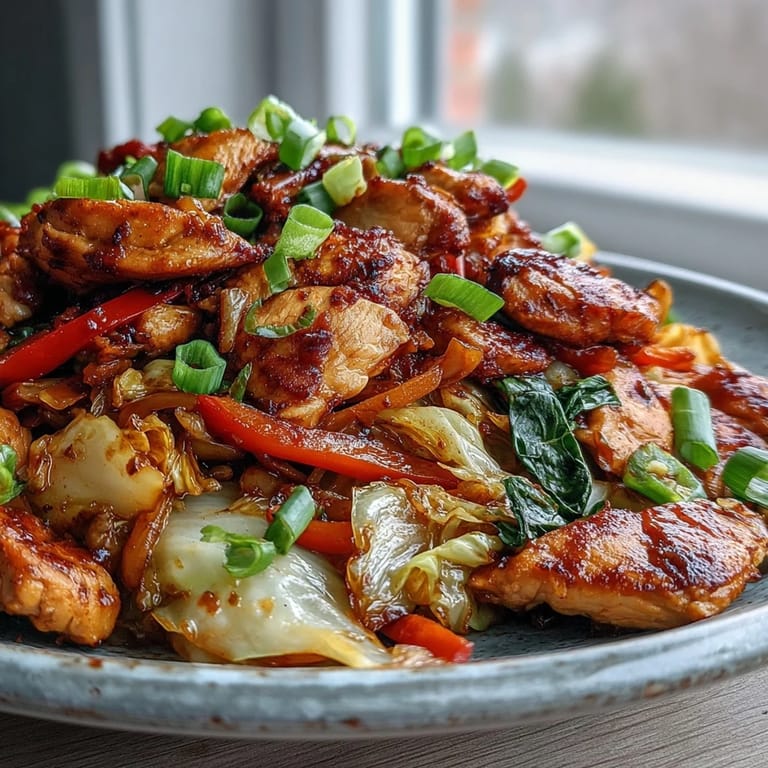
 One night I added too much ginger by accident and my daughter said it tasted like the noodle place we used to go to before it closed. She didn't know I was winging it. That's when I realized this recipe had become ours, not just something I found and followed.
Swapping Proteins
I've made this with shrimp when I needed it done even faster, and with pressed tofu when my friend who doesn't eat meat came over. Both worked beautifully as long as I adjusted the cooking time. Shrimp takes two minutes, tofu needs a little longer to get crispy on the edges. The sauce is forgiving and clings to just about anything you throw at it.
Making It Spicy
A pinch of chili flakes added with the garlic and ginger changes the whole mood of the dish. I like the heat creeping up slowly instead of hitting all at once. If you want more kick, drizzle some chili oil over the top right before serving and let everyone adjust their own heat level.
Serving Suggestions
This sits perfectly over jasmine rice, but I've also piled it onto rice noodles and even tucked it into lettuce wraps when I wanted something lighter. Leftovers reheat well and sometimes taste even better the next day when the flavors have settled in.
- Serve with steamed jasmine or brown rice for a classic pairing.
- Toss with cooked rice noodles or lo mein for a one bowl meal.
- Wrap in butter lettuce leaves for a low carb option that still feels satisfying.
 Pin This
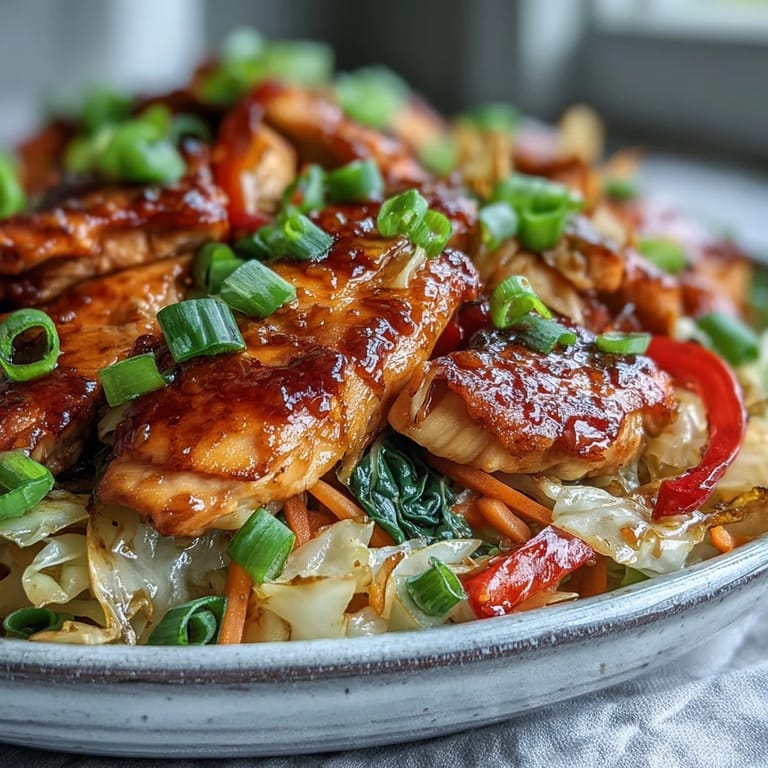
 This is the kind of meal that saves you when you're tired but still want something that tastes intentional. It's fast, it's flexible, and it always lands.
Recipe FAQ
- → Can I use a different protein instead of chicken?
Yes, tofu, shrimp, or thinly sliced pork work well. Adjust cooking times accordingly - shrimp cooks faster, while pork may need similar time to chicken.
- → How do I prevent the cabbage from becoming too soft?
Cook the cabbage over high heat for only 3-4 minutes. It should remain crisp-tender with a slight crunch. Avoid overcrowding the pan to ensure proper searing.
- → Can I make this gluten-free?
Use tamari instead of soy sauce and check that your oyster sauce and hoisin sauce are certified gluten-free. Many brands offer gluten-free versions of these condiments.
- → What can I substitute for oyster sauce?
Use additional hoisin sauce or a mixture of soy sauce with a touch of sugar. Mushroom-based vegetarian oyster sauce is another excellent alternative that maintains the umami depth.
- → How should I store leftovers?
Store in an airtight container in the refrigerator for up to 3 days. Reheat in a skillet or wok over medium heat, adding a splash of water if needed to refresh the sauce.
- → Can I prepare the sauce in advance?
Yes, mix the sauce ingredients and refrigerate in a sealed container for up to 3 days. Whisk again before using as the cornstarch may settle at the bottom.