 Pin This
 There's something about the smell of ham stock hitting hot oil that stops you mid-morning and makes you think about lunch before breakfast is even done. I learned to make this soup on a gray January afternoon when my neighbor dropped off half a smoked ham from her smokehouse, and I had no idea what to do with it except boil it into something warm. That first pot taught me that the best soups aren't complicated, they're just patient—letting time and simple ingredients do the work while you peel potatoes and listen to the radio.
I made this for my sister's book club one winter, thinking it was a safe bet for a crowd of people with different tastes. Watching six women demolish bowls of something I'd almost forgotten how to make was the quiet kind of victory—the sort where you just stand by the stove and smile because everyone's eating with their eyes closed.
Ingredients
- Smoked ham, diced (250 g): The foundation of flavor here, and honestly, you want it cut into little cubes rather than thin strips so each spoonful gets some smokiness.
- Cooked white beans, drained and rinsed (400 g): Cannellini or navy beans both work, and using canned saves time—just rinse them well or you'll end up with foam on top.
- Potatoes, peeled and diced (3 medium): Waxy varieties hold their shape better than mealy ones, so grab whatever feels firm in your hand.
- Carrots, diced (2 medium): The sweetness balances the salt from the ham, so don't skip them even if you're in a hurry.
- Celery stalks, diced (2): This is the quiet player that anchors everything—it won't taste like celery soup, just better.
- Onion, finely chopped (1 large): The softer you cook this first, the more it disappears into the background and becomes part of the broth itself.
- Garlic, minced (2 cloves): A minute is all it needs before you add the ham, or it turns bitter and ruins the whole mood.
- Chicken or vegetable broth, low-sodium (1.5 liters): Low-sodium matters because the ham brings plenty of salt—you're the one controlling the final seasoning, not the broth.
- Bay leaves (2): These little leaves do invisible work for an hour and then you fish them out—they're not meant to be eaten but they change everything.
- Dried thyme (1 tsp): If you have fresh thyme, use twice as much and add it in the last 10 minutes instead—it stays bright rather than getting muted.
- Black pepper, freshly ground (1/2 tsp): Ground fresh tastes sharp and alive, while pre-ground pepper gets tired sitting in the cabinet.
- Salt, to taste: Never add it at the start—wait until the end and taste as you go, because the ham and broth are already contributing.
- Olive oil (2 tbsp): Enough to coat the bottom of your pot and let the vegetables soften without sticking.
- Fresh parsley, chopped (2 tbsp, optional): A shower of green right before serving wakes up your mouth and makes it look like you tried harder than you did.
Tired of Takeout? 🥡
Get 10 meals you can make faster than delivery arrives. Seriously.
One email. No spam. Unsubscribe anytime.
Instructions
- Build your base with the soffritto:
- Heat the olive oil in a large pot over medium heat and add the onion, carrots, and celery—this trio is called soffritto and it's the foundation of almost every soup worth making. Let them soften for about 5 minutes, stirring now and then, until the onion starts to turn translucent and the whole pot smells alive.
- Wake up the garlic:
- Add your minced garlic and cook for just one minute—you're looking for fragrant, not brown. This is where timing matters; step away for two minutes and you'll regret it.
- Introduce the star player:
- Stir in the diced smoked ham and let it cook for 3 to 4 minutes without rushing. The heat will release all that smoky flavor into the oil, and your kitchen will smell like a promise.
- Gather everything together:
- Add the potatoes, beans, bay leaves, thyme, and pepper, then pour in the broth. Stir well so nothing sticks to the bottom, and you'll see the liquid turn slightly creamy from the beans breaking down just a little.
- Let time do the work:
- Bring the soup to a boil, then immediately turn the heat down to low, cover it, and let it simmer for an hour. The potatoes will go from firm to tender, the flavors will find each other, and you can go read something or fold laundry in the next room.
- Fish out the bay leaves and taste:
- After an hour, remove the bay leaves completely—they've given their gift and now they're just paper. Taste a spoonful and add salt until it tastes like it was meant for you.
- Finish with green and heat:
- Ladle the soup into bowls, scatter fresh parsley on top if you have it, and serve while it's hot enough to warm your hands through the bowl.
 Pin This
 My daughter came home from school in the middle of making this soup once and announced she'd decided to be vegetarian, which felt like the worst possible timing. I let her taste it anyway, and she ate three bowls before we ever had that conversation. Sometimes food says things words can't, and this soup said love in a language everyone understands.
The Quiet Power of Smoked Ham
Smoked ham is one of those ingredients that transforms from a leftover into a reason to cook. It's salty and deep and it doesn't need much help to make a whole pot of liquid taste intentional. The smoke settles into the broth like it's been there the whole time, and by the end you forget you started with meat and beans and just taste wholeness.
When to Make This Soup
This is January food, or February, or any day the light comes through the windows gray and the world outside feels too far away. It's also the kind of soup you make when you want your house to smell like someone loves everyone in it, which can happen in any season if you're paying attention to your mood rather than the calendar. Set it going in the morning and by evening you've got dinner sorted and your whole day smells like care.
Stretching and Storing This Soup
This recipe makes six servings, but it's honestly more flexible than that—add more broth if you like it brothier, or let it sit in the fridge overnight and it'll thicken slightly as the starches settle. Leftover soup tastes better than the day you made it, which is rare enough to be worth noting. Serve it with crusty bread so you have something to dunk and can soak up every bit of that golden broth, or just eat it straight from a bowl with butter spread on good bread on the side.
- Leftovers keep refrigerated for up to 3 days and taste noticeably better on day two when everything has had time to become friends.
- You can swap the smoked ham for smoked turkey or sausage if you want variation, and the soup adapts without complaint.
- A ham bone simmered from the start makes this soup taste like it took hours instead of minutes, so hunt one down if your butcher has one.
 Pin This
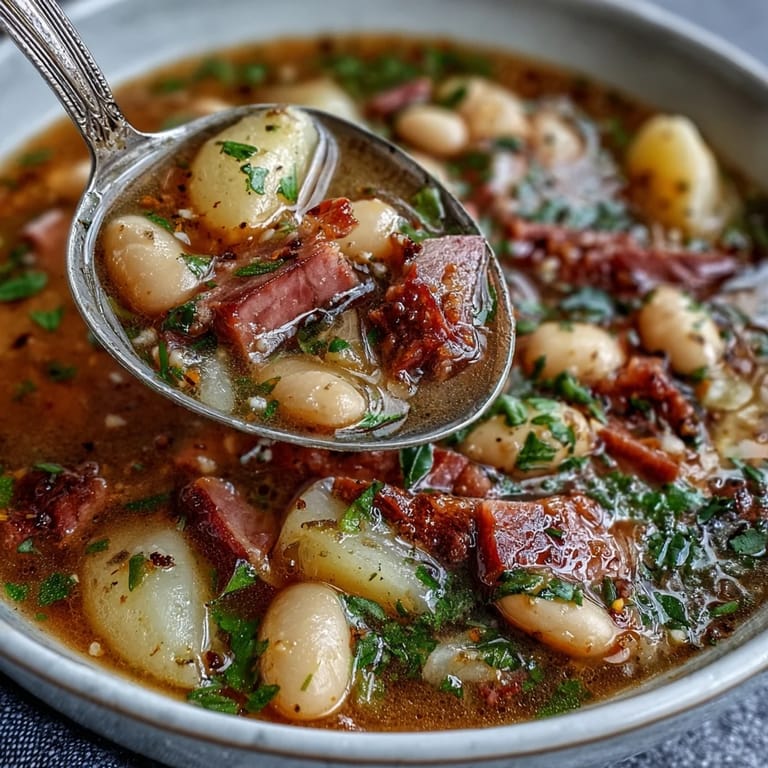
 This soup asks for nothing fancy and gives back everything warm. Make it, feed people with it, and watch how something so simple becomes the reason someone remembers your kitchen kindly.
Recipe FAQ
- → What kind of beans works best?
Cannellini or navy beans are ideal due to their creamy texture and mild flavor, which complement the smoky ham well.
- → Can I substitute smoked ham with other meats?
Yes, smoked turkey or sausage provide flavorful alternatives, offering a different but equally satisfying taste.
- → How do I achieve the best texture for the potatoes?
Use medium potatoes peeled and diced uniformly; simmer gently until tender but not falling apart for ideal texture.
- → What herbs enhance the flavor?
Bay leaves and dried thyme bring earthy and aromatic notes that deepen the overall flavor profile.
- → Is olive oil necessary for the initial sauté?
Olive oil creates a flavorful base by softening the vegetables and helping release the ham’s smokiness during cooking.