 Pin This
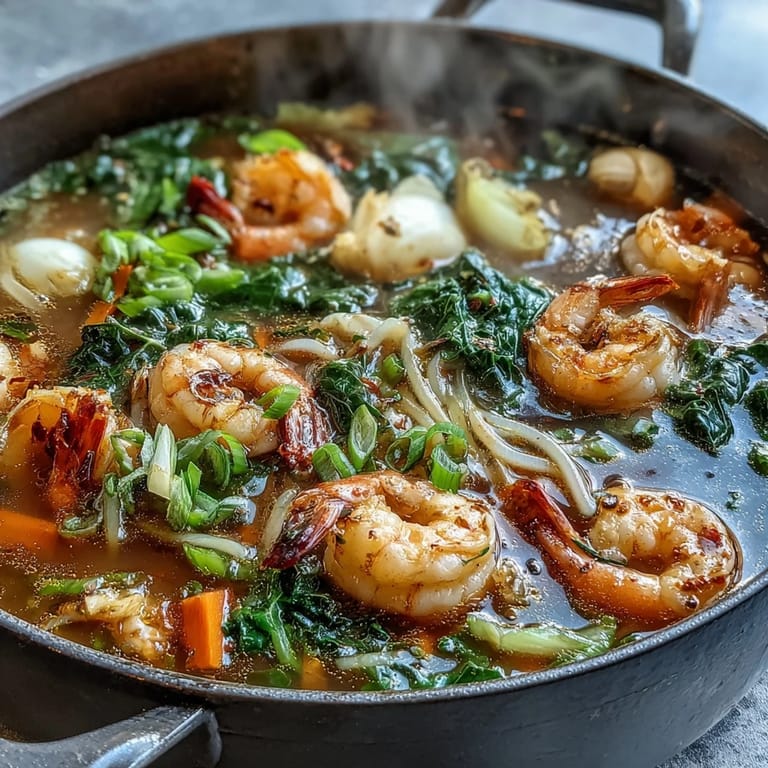
 My neighbor once asked me why I was buying so much fresh seafood on a Thursday night, and when I explained I was hosting a hot pot dinner, her eyes lit up like I'd just invited her to something magical. That's the thing about hot pot—it transforms a meal into theater, where everyone becomes both chef and diner, leaning over a bubbling pot of fragrant broth like we're gathered around something alive. The first time I made this seafood version, my hands were shaking slightly as I arranged the platters, worried I'd forgotten something crucial, but the moment that broth hit the table and everyone started choosing their ingredients, all that nervous energy dissolved into pure joy.
There was this one evening when my friend brought her elderly parents over, and I was honestly nervous about whether hot pot would feel too casual or fussy for them. But watching her father carefully select a shrimp, place it in the broth with chopsticks, and then taste it moments later with genuine delight—that's when I realized this dish creates something beyond the food itself, this shared rhythm of choosing, waiting, savoring.
Ingredients
- Low-sodium chicken or seafood stock (8 cups): This is your foundation, and using good stock makes all the difference—I learned the hard way that bargain broth tastes bargain, so splurge a little here if you can.
- Fresh ginger (3 slices): Bruise it slightly before adding so it releases its essential oils into the broth; this creates that warm, subtle heat that makes everything taste more alive.
- Garlic (3 cloves, smashed): Smashing rather than mincing keeps the pieces large enough to fish out later, and the flavor distributes more evenly through the broth.
- Lemongrass (2 stalks, bruised and chopped): This is what makes the broth smell like Southeast Asia—don't skip it, but do bruise it to crack the fibers open.
- Soy sauce, fish sauce, and rice vinegar (2 tablespoons, 1 tablespoon, 1 tablespoon respectively): These three create the umami backbone that makes people close their eyes when they taste the broth.
- Fresh red chilies (1–2, sliced): Leave the seeds in if you like heat, remove them for a gentler warmth that lingers rather than shouts.
- Raw shrimp (8 large): Ensure they're truly raw and not pre-cooked; the difference is visible and matters for timing.
- White fish fillet (200g): Cod and snapper are forgiving—they don't turn rubbery when cooked quickly, which is essential in hot pot cooking.
- Mussels or clams (8 fresh): Buy these the day of, tap any that are open to see if they close (they should), and discard any that don't close or have cracks.
- Squid rings (150g): Fresh or frozen both work, but if using frozen, thaw completely and pat dry before serving.
- Vegetables (napa cabbage, bok choy, shiitake, enoki, carrot, zucchini): The variety matters because different textures and flavors keep the meal interesting through multiple rounds of cooking.
- Firm tofu (1 cup, cubed): Press it first by wrapping in paper towels and weighting it down for 15 minutes—this prevents it from shattering when it hits the hot broth.
- Glass noodles or rice vermicelli (200g): Soak these ahead of time so they're ready to go, and watch them carefully as they can absorb broth quickly and become mushy.
- Spring onions and fresh cilantro: These garnishes feel optional until you taste the difference they make—they brighten everything and add a textural pop.
- Lime wedges: A squeeze of lime is what takes a good hot pot and makes it unforgettable, so don't skip this final touch.
Tired of Takeout? 🥡
Get 10 meals you can make faster than delivery arrives. Seriously.
One email. No spam. Unsubscribe anytime.
Instructions
- Build your aromatic broth foundation:
- In a large pot, combine your stock with the ginger, garlic, and lemongrass, then bring it to a rolling boil before dropping the heat to a gentle simmer. Let it bubble quietly for 20 minutes—you'll notice the kitchen filling with this incredible savory, herbal aroma that signals something delicious is happening. After the time's up, strain out all the solids and return the clear, golden broth to the pot, then stir in the soy sauce, fish sauce, rice vinegar, and chilies.
- Arrange your seafood and vegetables like you're setting a stage:
- On separate platters or small bowls, arrange the shrimp, fish, mussels, squid, napa cabbage, bok choy, mushrooms (keep enoki and shiitake separate since they cook at different rates), carrot, zucchini, tofu, and pre-soaked noodles so everything is visible and within easy reach. This isn't just practical—it's the visual part of the experience, showing everyone what's possible.
- Bring everything to the table:
- Transfer your hot broth into a hot pot or wide saucepan and place it on a portable burner or induction cooktop in the center of the table, then turn the heat to keep it at an active simmer. Arrange all the platters around the hot pot like petals around a flower, with ladles, tongs, and individual bowls ready for each diner.
- Invite everyone to cook their own ingredients:
- Go around and ask each person what they'd like to cook first—this is where the magic happens, because there's no rigid order, just people choosing what sounds good in that moment. Shrimp and fish take about 2–3 minutes until they turn opaque, mussels need 3–4 minutes until they pop open (discard any that don't), squid needs just 1–2 minutes or it toughens, and vegetables are done when they're tender-crisp but still have a slight resistance.
- Finish with garnishes and personal flavor:
- As each person's ingredients are cooked, ladle them into an individual bowl with some of the hot broth, then top with sliced spring onions, fresh cilantro, and a generous squeeze of fresh lime. The lime is crucial—it cuts through the richness and somehow makes every flavor pop.
 Pin This
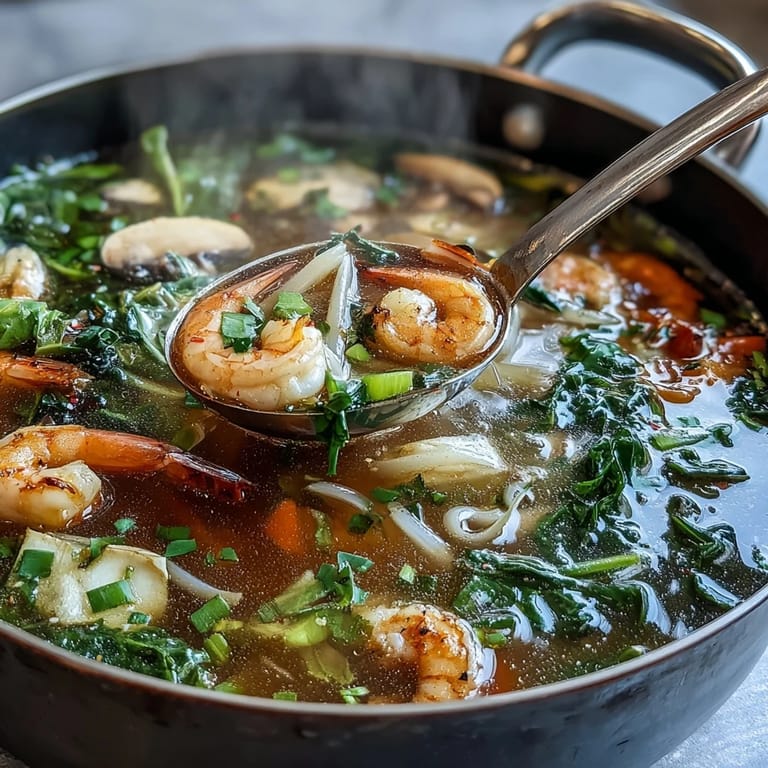
 The most memorable hot pot I ever made was accidentally—I had overcooked some shrimp at the start, panicked thinking I'd ruined everything, but then realized that the longer the meal went on, the more flavors layered into the broth from everything people cooked, turning those overcooked shrimp into a strange sort of blessing that enriched the pot. It's in those moments that hot pot stops being about perfection and becomes about the conversation, the laughter, the way someone discovers they love squid because they've never had it this fresh before.
The Magic of Interactive Cooking
There's something about giving people control over their own cooking that unlocks a different kind of joy—instead of passively waiting for food, they're active participants, and that changes the whole mood of the meal. I've watched shy dinner guests become animated once they realize they can cook at their own pace, taking time to chat while waiting for their mussels to open or their vegetables to soften. The table becomes a kitchen, and everyone's invested in the outcome.
Creating the Perfect Broth
The broth is honestly the most important element, and it's worth tasting it and adjusting as you go rather than just following the recipe blindly. I once made it with too much fish sauce and it became almost metallic, which taught me that these bold ingredients are more powerful than they seem, so you build flavor layer by layer, tasting as you go. A properly balanced broth should make you want to drink it straight from your bowl when the meal is over—that's how you know you've got it right.
Timing, Patience, and Beautiful Accidents
Hot pot teaches you something about patience that other cooking methods don't—you can't rush it, and frankly, the meal is better when you're not trying to. The beauty is that if someone cooks their shrimp a minute too long, it just becomes more tender rather than ruined, and if someone forgets to fish out a piece of tofu, it infuses the broth with more delicate, silky flavor. There's built-in forgiveness in this style of cooking, which maybe is why it brings people together so naturally.
- Have all your ingredients prepped and within arm's reach before the broth hits the table, because once you sit down, you won't want to get up.
- Use a slotted spoon or small strainer ladle for fishing out cooked ingredients so you can leave the broth in the pot where it belongs.
- Keep the portable burner or induction cooktop at a spot where everyone can see it and reach it safely without leaning dangerously over hot liquid.
 Pin This
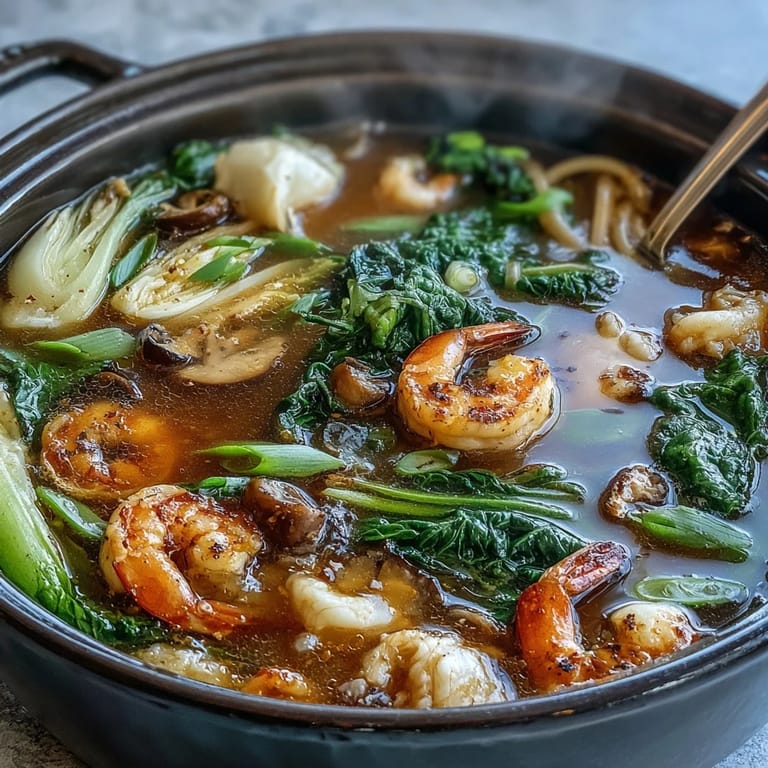
 Hot pot is the kind of meal that lingers long after everyone's pushed back from the table, not because of the food but because of what happened around it. Make this with people you actually want to spend time with, taste the broth together, and watch how a simple simmering pot becomes the center of something warm and genuinely connected.
Recipe FAQ
- → What seafood works best in this hot pot?
Fresh shrimp, white fish fillets, mussels, clams, and squid rings provide a balanced variety of textures and flavors.
- → How is the broth prepared?
The broth is simmered with chicken or seafood stock, fresh ginger, garlic, lemongrass, soy and fish sauces, rice vinegar, and optional chilies for depth and aroma.
- → Can the hot pot be customized for spiciness?
Yes, add more fresh chilies or chili paste to increase the heat according to personal preference.
- → What vegetables complement this seafood hot pot?
Napa cabbage, baby bok choy, shiitake and enoki mushrooms, carrots, zucchini, and firm tofu add color, texture, and nutrition.
- → How long should ingredients cook once added to the broth?
Seafood cooks quickly in 2–3 minutes until opaque, while vegetables should be tender but still crisp to retain freshness.
- → Are there suitable substitutes for stock if preferred?
You can substitute chicken or beef stock for a different flavor profile, adjusting seasonings as needed.