 Pin This
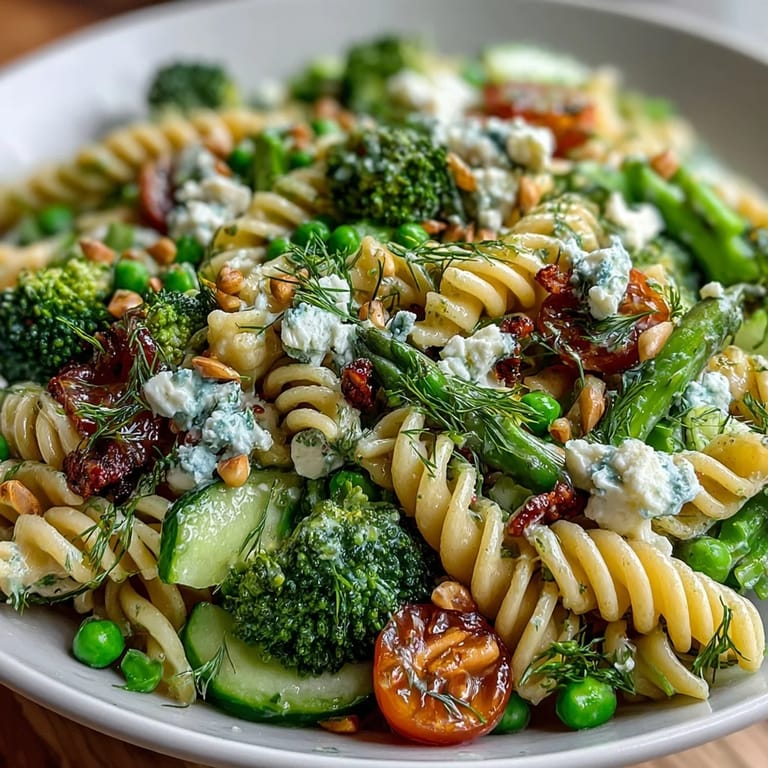
 Last spring, I found myself staring at a farmers market haul of the most vibrant vegetables—broccoli so green it practically glowed, fresh peas still in their pods, and cherry tomatoes that smelled like pure sunshine. I had no plan, just a sudden craving for something cold and bright that didn't feel heavy. That afternoon, this pasta salad was born, and it's been my go-to ever since whenever I need to feed people something that tastes like the season itself.
I made this for a backyard picnic last June, and watching people come back for thirds made me realize it hits that perfect sweet spot—satisfying enough to be a real meal, but light enough that nobody feels sluggish afterward. One friend asked for the recipe that day, and now she texts me photos of her version with whatever vegetables she finds at the market.
Ingredients
- Short pasta (fusilli, penne, or farfalle): Choose 250 g, as the shapes catch the dressing beautifully and hold onto the vegetables instead of sliding away like fettuccine would.
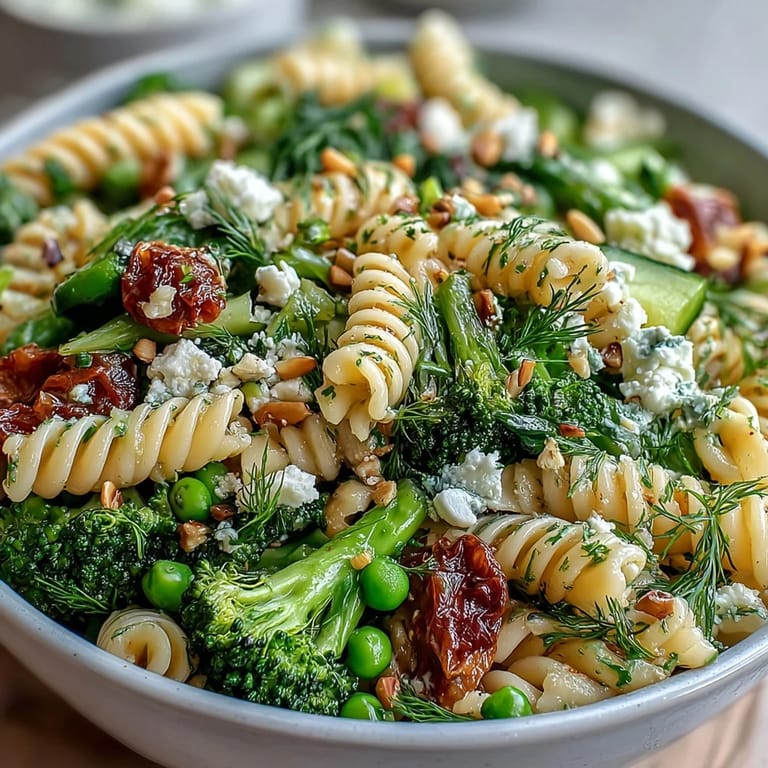
- Fresh broccoli florets: Cut them small so they stay tender when you briefly cook them with the pasta—this saves a dirty pan and keeps things quick.
- Fresh or frozen peas: Either works perfectly; frozen are actually great because they haven't lost any brightness and thaw instantly in the hot water.
- Cherry tomatoes, halved: Halving them rather than dicing means they don't disappear into the bowl, and you actually taste each one.
- Spring onions, thinly sliced: These give you a gentle onion bite without overwhelming the delicate vegetables—save some white and green parts separately for layering flavor.
- Cucumber, diced: Add this last minute before serving or it'll weep water and dilute your dressing; fresh and crisp is the whole point.
- Extra-virgin olive oil: Don't skimp here; it's one of four dressing ingredients, so quality matters—you'll taste every drop.
- Freshly squeezed lemon juice: Bottled works in a pinch, but fresh makes the entire dish sing differently, almost like you've added an invisible ingredient.
- Dijon mustard: Just one teaspoon acts like a flavor bridge, making the herbs and lemon punch through instead of whisper.
- Garlic, finely minced: Mince it small so it distributes evenly and doesn't leave sharp chunks; I learned this after biting into a whole clove once.
- Fresh dill and parsley: These are non-negotiable—dried herbs turn this into something forgettable, but fresh ones make it taste like spring itself.
- Feta cheese and toasted pine nuts: Both optional, but they transform this from side dish to something worthy of being the main event on a warm day.
Tired of Takeout? 🥡
Get 10 meals you can make faster than delivery arrives. Seriously.
One email. No spam. Unsubscribe anytime.
Instructions
- Start the water and season generously:
- Bring a large pot of salted water to a boil—it should taste almost like the sea. This is your only chance to season the pasta itself, so don't be shy.
- Cook the pasta until just al dente:
- Follow the package time but subtract a minute; it'll keep cooking slightly when you add the broccoli. You want it tender but still with a whisper of resistance when you bite it.
- Sneak in the broccoli and peas at the last moment:
- With two minutes left, add the broccoli florets and peas to the boiling water. They'll turn brilliant green and cook through while the pasta finishes, meaning one less step and one less pot to wash.
- Drain and cool everything together:
- Pour everything into a colander and run it under cold water, tossing gently with your hand so the cold water reaches everything. This stops the cooking and keeps the vegetables bright.
- Whisk the dressing into existence:
- In a large bowl, combine olive oil, lemon juice, mustard, garlic, dill, and parsley, whisking until it emulsifies slightly. Taste as you go and adjust—this is where you make the recipe yours, not mine.
- Toss everything together gently but thoroughly:
- Add the cooled pasta, broccoli, peas, tomatoes, spring onions, and cucumber to the dressing. Use a light hand so you don't bruise the vegetables, but make sure every piece gets coated.
- Finish with cheese and nuts, then decide on timing:
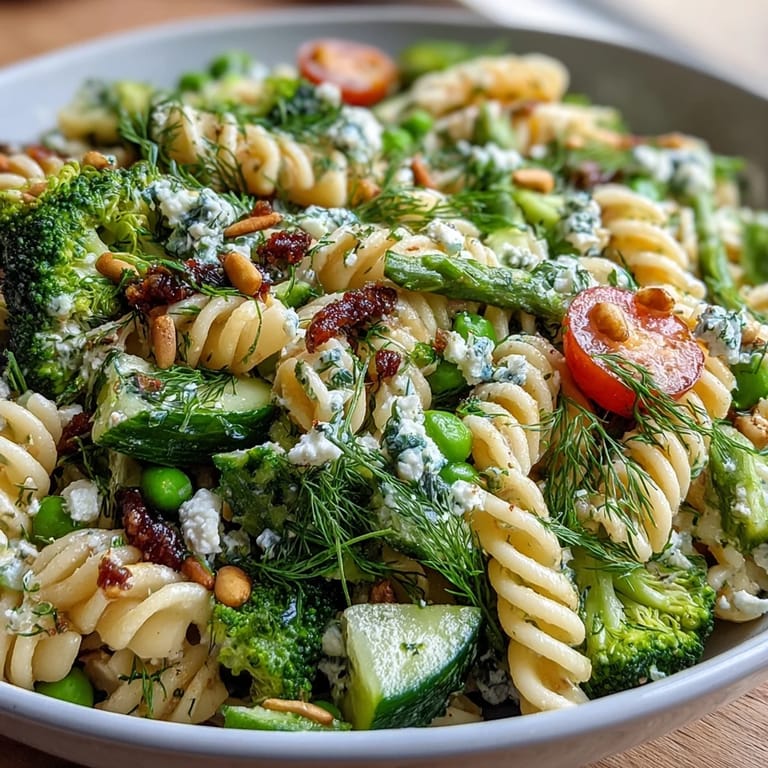
- Top with crumbled feta and toasted pine nuts if you're using them. Serve immediately for maximum crunch, or refrigerate up to four hours so the flavors marry together.
 Pin This
 There's something almost meditative about building this salad—the smell of fresh herbs, the way the bright vegetables pile up in the bowl, the moment you taste the dressing and realize it's exactly right. It became my answer to those afternoons when you want to cook something that nourishes you without asking much in return.
Why This Works As a Light Main Course
Pasta salad has a reputation for being heavy, but this one breaks that stereotype because the vegetables genuinely outnumber the pasta, and the lemon dressing is thin and bright instead of creamy and clinging. The key is not filling the bowl with mayo-based dressing the way some recipes do—instead, you're letting the vegetables shine while the olive oil and herbs create a veil of flavor. When you top it with feta and pine nuts, you get enough richness and protein to make it substantial without feeling like a kitchen sink threw up on a plate.
How to Customize This Without Losing the Spirit
The skeleton of this recipe is so strong that you can swap vegetables with the seasons and never lose what makes it special. Spring asparagus, summer snap peas, radishes for crunch, shredded carrots for color—they all work because the dressing is flexible enough to carry them. The one thing I won't compromise on is the fresh herbs; they're what prevent this from tasting like every other pasta salad at a potluck, so even if you change everything else, keep the dill and parsley fresh.
Make-Ahead Strategy and Storage Tips
This is genuinely better when made a few hours ahead because the pasta absorbs the dressing and everything becomes friends. Assemble it in the morning for an afternoon picnic, or make it the night before and it'll be waiting for you. The only exception is the cucumber, which should go in right before serving or it'll turn everything watery and sad.
- Store in an airtight container in the refrigerator for up to four days, though it's best within the first two.
- If it seems dry when you pull it out, whisk together a little more lemon juice and olive oil and toss it through—pasta absorbs liquid as it sits.
- Transport it in the serving bowl if you're heading to a picnic, and add the feta and pine nuts right before people eat so they stay crispy.
 Pin This
 This pasta salad lives in that beautiful middle ground between effort and reward, and I've made it probably a hundred times now without it ever feeling routine. Every time someone asks for seconds, I remember why I love feeding people food that tastes like care without tasting like stress.
Recipe FAQ
- → Can I prepare this dish ahead of time?
Yes, it can be refrigerated for up to 4 hours to allow the flavors to meld beautifully before serving.
- → What pasta types work best in this dish?
Short pasta varieties like fusilli, penne, or farfalle hold the dressing well and complement the vegetables perfectly.
- → Is there a way to make this for vegan diners?
Omit the feta cheese or substitute it with a plant-based alternative to keep the dish vegan-friendly.
- → Can I add other vegetables for extra crunch?
Yes, adding blanched asparagus, snap peas, or radishes enhances texture and color without overpowering the flavors.
- → What dressing flavors are featured in this dish?
The dressing combines fresh lemon juice, extra-virgin olive oil, Dijon mustard, garlic, dill, and parsley for a zesty and herby finish.